15 Terraced Landscaping Ideas for Sloped Yards and Stylish Outdoor Living
A sloped yard does not have to feel hard to use or maintain. With the right layout, it can become one of the most useful and attractive parts of a home. Terraced landscaping turns uneven ground into level, usable spaces for planting, seating, and daily living.

This guide explores practical ways to build strong retaining walls, layer plants for depth, add water features, and connect levels with paths and decking. It also covers smart details like lighting, irrigation, erosion control, and low‑maintenance plant choices so each terrace works well and looks clean year round.
1) Natural stone retaining walls using limestone or fieldstone

Natural stone retaining walls give terraces structure and strength. Contractors often use limestone or fieldstone for their durability and natural look.
Many homeowners choose natural stone retaining wall ideas to blend terraces into the landscape. Fieldstone works well for dry stacking, while limestone creates clean, solid lines.
2) Multi-level planting beds for diverse vegetation

Multi-level planting beds create flat areas on a slope. They support different plant types in one yard.
Designers use terraced beds to control erosion and improve drainage, as shown in these terraced garden ideas for multi-level yards. Each level can hold vegetables, shrubs, or flowers based on light and soil needs.
Layered layouts also make planting and care easier. This approach suits many sloped garden ideas that focus on function and access.
3) Incorporating Mediterranean herbs in raised beds

Raised beds suit Mediterranean herbs like rosemary, thyme, oregano, and basil. They improve drainage and warm up faster in spring.
A Mediterranean-themed terraced garden often uses terracotta pots, olive trees, lavender, and sun-loving herbs for a simple, cohesive look.
Stone-edged beds filled with herbs add structure and reflect ideas like raised stone beds for Mediterranean herbs.
4) Built-in stone seating areas for relaxation
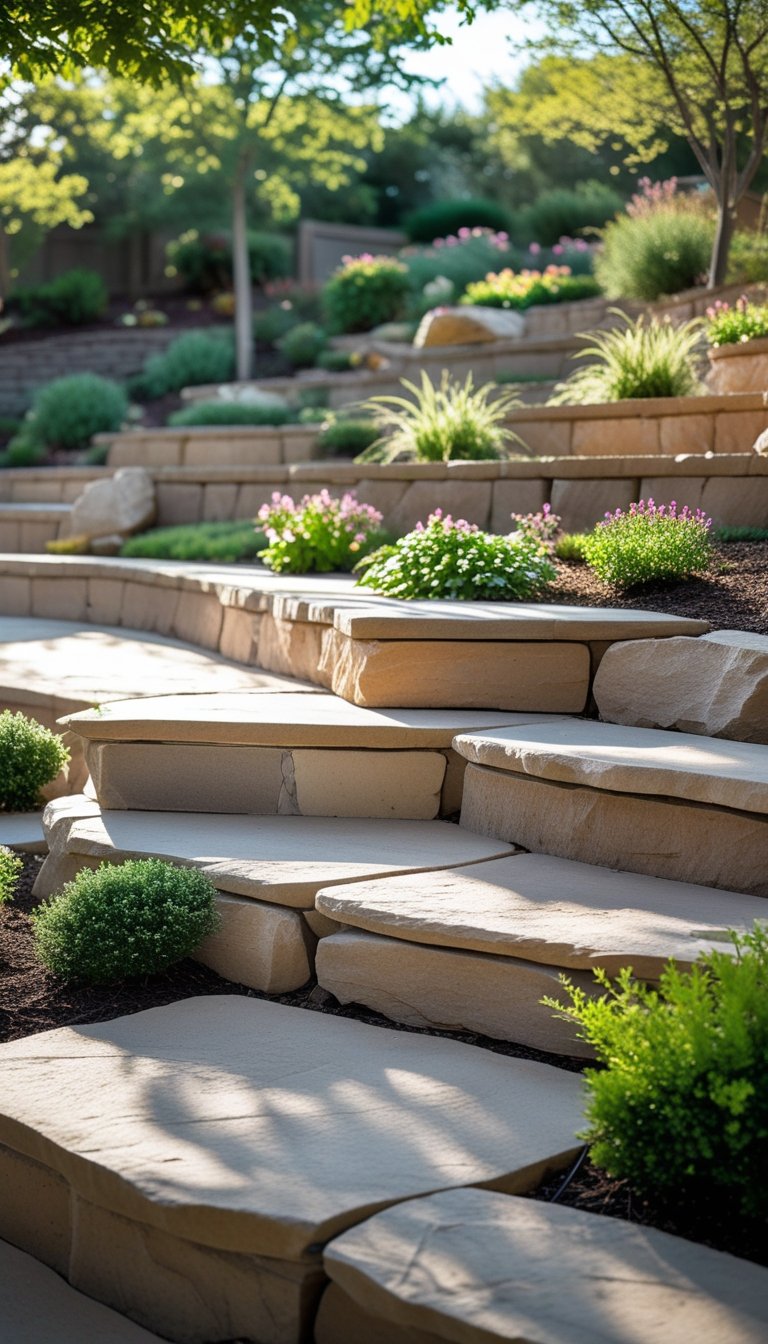
Built-in stone seating creates stable, low‑maintenance places to sit. Designers often use natural stone seat wall ideas to shape patios and terraces.
Stone benches define levels and support terraced layouts. They add function without clutter and blend with surrounding plants and paving.
5) Cascading flower beds with layered colors

Cascading flower beds use each terrace level to display a different color or plant type. Designers often place taller plants at the back and low growers near the edge.
Many homeowners draw ideas from these terraced garden ideas for sloped yards. They repeat colors across levels to create a clear, layered pattern that guides the eye downward.
6) Water features like small waterfalls between terraces

Small waterfalls fit naturally between terrace levels. Sloped yards support waterfalls, tiered fountains, and small streams.
Water adds steady sound and movement. Even small water features or fountains create a clear focal point without taking much space.
7) Using slate for organic, textured wall surfaces

Slate creates strong, textured retaining walls that hold soil in place. It adds a natural look that fits many garden styles.
Many homeowners choose slate for retaining wall construction. Its layered surface adds depth and subtle color variation.
They can also use slate for patios and hardscape features, as shown in these slate landscaping ideas. The stone stays durable in outdoor conditions.
8) Combining edible plants with ornamental flowers

They can plant herbs, lettuce, or peppers beside bright flowers to use terrace space well. Edible landscaping blends food and design in one bed, as shown in these edible landscaping ideas.
Marigolds, basil, and kale add color and texture. This approach supports pollinators and keeps terraces productive and attractive throughout the season.
9) Incorporating mulch and ground covers for erosion control

Mulch helps terraces hold moisture and limit weed growth. It also reduces soil movement during heavy rain.
Deep-rooted plants create a natural barrier. Many designers rely on deep-rooted ground covers for sloped front yards to anchor soil and slow runoff.
10) Terraces with integrated garden lighting

Integrated lighting improves safety and extends terrace use after dark. Builders can place low-voltage LED strips along steps and retaining walls for clear visibility.
They can add recessed lights into stone or wood surfaces. Many homeowners explore ideas from terraced garden designs for sloped yards to plan lighting with structure.
Soft uplights also highlight plants without glare.
11) Modern wood decking between terrace levels

Modern wood decking creates clean transitions between terrace levels. It connects spaces while keeping the layout open and simple.
Many homeowners use ideas from multi-level deck designs for sloped yards to guide placement. Wide steps and built-in seating improve flow and function.
Natural wood tones soften stone and concrete surfaces. This contrast keeps the yard balanced and practical.
12) Stepping stone paths connecting different levels

Stepping stone paths link each terrace with safe, steady footing. They guide movement without crowding the space.
Designers often use natural stone for strength and texture, as seen in these stepping stone walkway ideas. Proper spacing and a firm base help prevent shifting and uneven steps.
13) Using drought-tolerant plants for low maintenance

Terraced yards benefit from plants that handle dry soil and full sun. Many homeowners choose drought-tolerant landscaping ideas to reduce watering and upkeep.
They can group plants with similar water needs to avoid waste. Strong choices include shrubs and perennials listed in these low-water plant recommendations.
14) Terracing with built-in irrigation systems

Built-in irrigation systems keep terraced gardens watered in a controlled way. They reduce runoff and help plants grow evenly across levels.
Many homeowners use drip lines or gravity-fed setups, as seen in terrace garden solutions for sloped properties. These systems save water and lower maintenance time.
15) Vertical gardens on terrace walls

Vertical gardens turn blank terrace walls into active planting space. They increase growing area without using floor space.
Homeowners can mount planters, racks, or recycled pallets. Many use ideas from vertical garden designs for small spaces to guide layout.
They often grow herbs, trailing flowers, or compact vegetables. Secure frames well and ensure proper drainage.