
13 Rooftop Garden Ideas to Elevate Urban Outdoor Living
A rooftop does not have to stay empty or plain. It can become a useful outdoor space that adds comfort, greenery, and function to a home. With the right plan, they can turn even a small roof into a practical garden area.

This article shows how they can design a rooftop garden that fits their space, budget, and climate. It covers smart layout ideas, plant choices, durable materials, irrigation, lighting, and seating. Each idea helps them create a rooftop garden that looks clean, works well, and stays easy to maintain.
1) Install lightweight container planters for easy mobility

Lightweight planters make rooftop gardening practical and flexible. They reduce structural strain and handle sun, wind, and rain.
Many modern options use resin or similar materials designed for rooftops, as shown in these lightweight rooftop planters.
Gardeners can move containers to adjust for sunlight, shade, or layout changes. This setup also simplifies cleaning and seasonal updates.
2) Incorporate vertical gardens to maximize space

Vertical gardens help them grow more plants without using floor space. They work well on small rooftops.
They can install a vertical garden wall system for rooftops with modular planters or wall-mounted units. Many small spaces benefit from a vertical garden wall for small rooftop spaces that supports herbs, succulents, or climbing plants.
3) Choose drought-tolerant plants like succulents and sedums

Rooftop gardens face strong sun and wind. Drought-tolerant plants handle these harsh conditions with less water.
Succulents such as agave, aloe, and echeveria store water in their leaves. Many gardeners rely on drought-tolerant succulents for low-maintenance rooftops.
Sedums, also called stonecrops, spread easily and resist dry soil. They rank among the best sedum plants for gardens and work well in shallow rooftop beds.
4) Use metal furniture and custom arbors for durability

Metal furniture handles wind, rain, and sun with less wear than many other materials. It needs little upkeep and suits small rooftop spaces.
Custom arbors add structure and shade. Many rooftop landscaping ideas feature metal frames that support climbing plants and define seating areas.
5) Add Tournesol planters for modern aesthetics

Tournesol planters give rooftop gardens a clean, modern look. Many designers use them in commercial rooftop projects for a structured layout.
They offer durable fiberglass options in many shapes and sizes, as shown in these commercial fiberglass planters. Their smooth finish pairs well with simple plantings and straight lines.
6) Create a formal garden with concrete pavers

Concrete pavers help shape a clean, formal layout on a rooftop. Designers often use them in formal garden with concrete paving ideas.
They define straight paths and clear borders. On rooftops, many builders prefer architectural pavers for rooftop patios because they suit elevated spaces and structured designs.
7) Design shaded areas with pergolas or retractable awnings

Pergolas add structure and filtered shade to rooftop gardens. Wood or metal frames define seating or dining zones while allowing airflow. Many modern pergola designs for rooftop terraces include motorized canopies for light control.
Retractable awnings offer flexible coverage. Homeowners can extend them during peak sun and retract them later. Explore practical pergola shade ideas to match daily use and maintenance needs.
8) Install an efficient drip irrigation system

A drip system delivers water slowly and directly to plant roots. This method reduces waste and keeps leaves dry.
Many gardeners use a DIY drip irrigation system for raised beds to save time and water. It connects to a faucet and works well with timers for steady watering.
9) Use edible plants such as herbs and cherry tomatoes

Grow herbs, strawberries, and cherry tomatoes in raised beds or pots for a practical and appealing space, as shown in this guide to rooftop edible plant ideas.
Place full sun crops like tomatoes where they receive at least six hours of light, and keep shade tolerant herbs in cooler spots, following these edible garden layout tips for green roofs.
10) Incorporate smart lighting for ambiance and safety
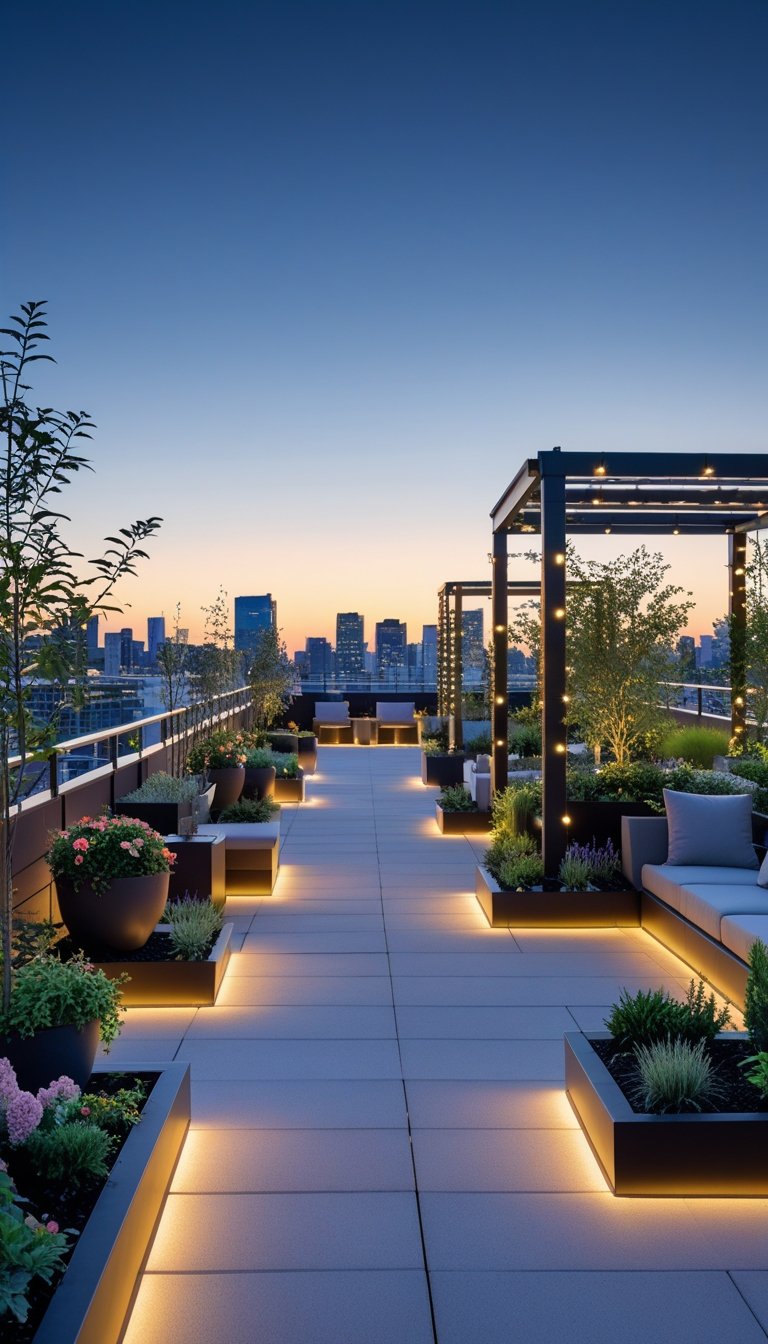
Smart lighting improves both comfort and safety on a rooftop garden. It helps people move around at night without harsh glare.
Options like smart outdoor lighting ideas allow remote control and timed settings. LED strips, path lights, and soft uplighting create layered light while keeping walkways visible.
11) Create a mix of evergreen and flowering plants

A balanced rooftop garden blends evergreen plants with seasonal flowers. Evergreens keep the space green year round and provide structure.
Flowering plants add color and change with the seasons. Many designers suggest mixing textures and blooms for visual interest, as shown in these rooftop flower garden ideas.
12) Add seating areas with weather-resistant cushions
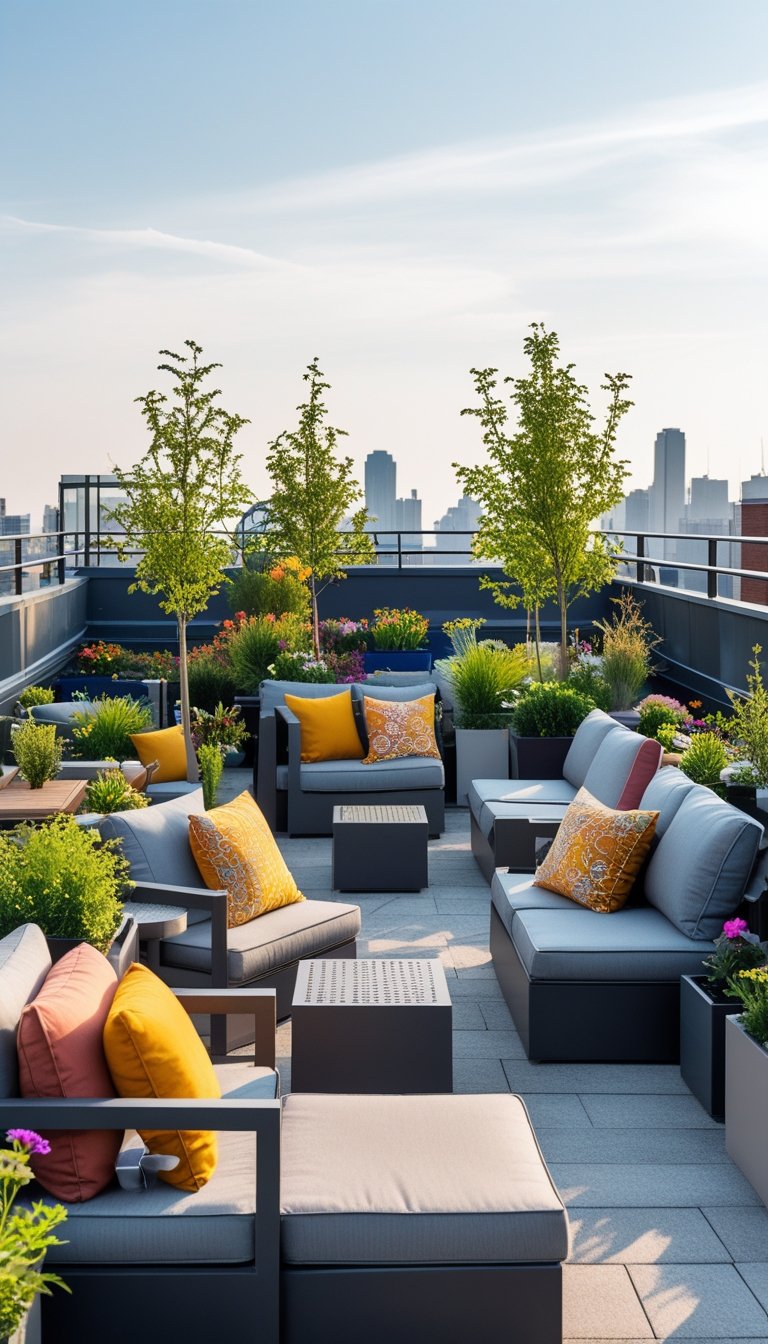
Seating makes a rooftop garden more usable. Choose outdoor sofas or chairs built for sun and rain.
Add durable, weather-resistant cushions for comfort and color, as seen in these rooftop patio seating ideas. Layer outdoor rugs and low tables to define the space and support daily use.
13) Use raised bed gardens for better soil control

Raised beds give gardeners direct control over soil quality and drainage. They can choose clean soil blends that support healthy root growth.
Raised beds also improve aeration and reduce weeds. Many rooftop projects use raised garden beds for better drainage and access to keep plants productive in limited space.

