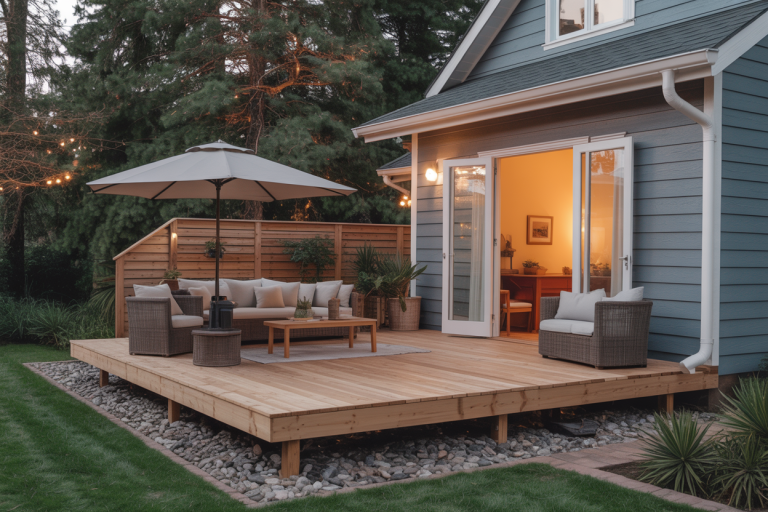
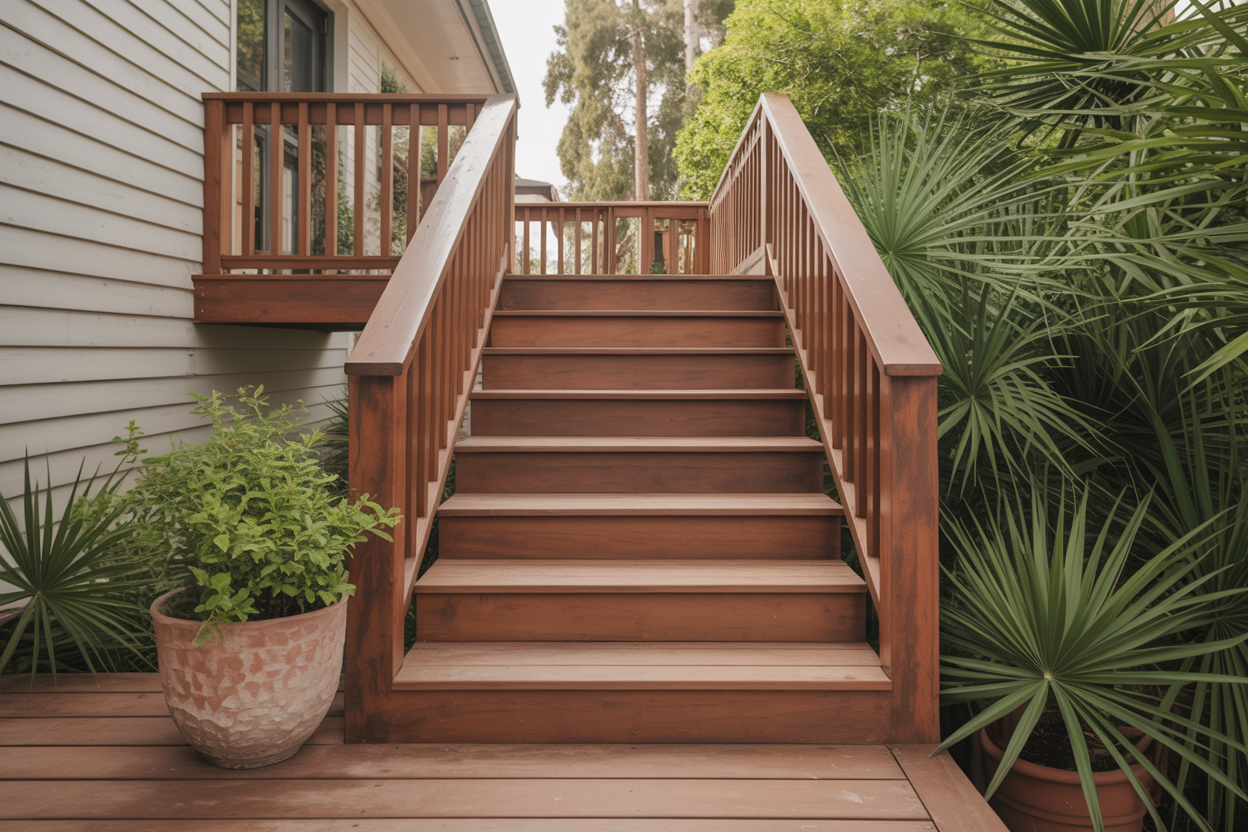
14 Deck Stairs Ideas With Landing for Safer, Stylish Outdoor Access
You want deck stairs that look good and feel safe every time you step outside. Adding a landing changes how your stairs work and how your deck connects to the yard. This guide shows you 14 practical deck stairs ideas with landings that improve safety, comfort, and layout.
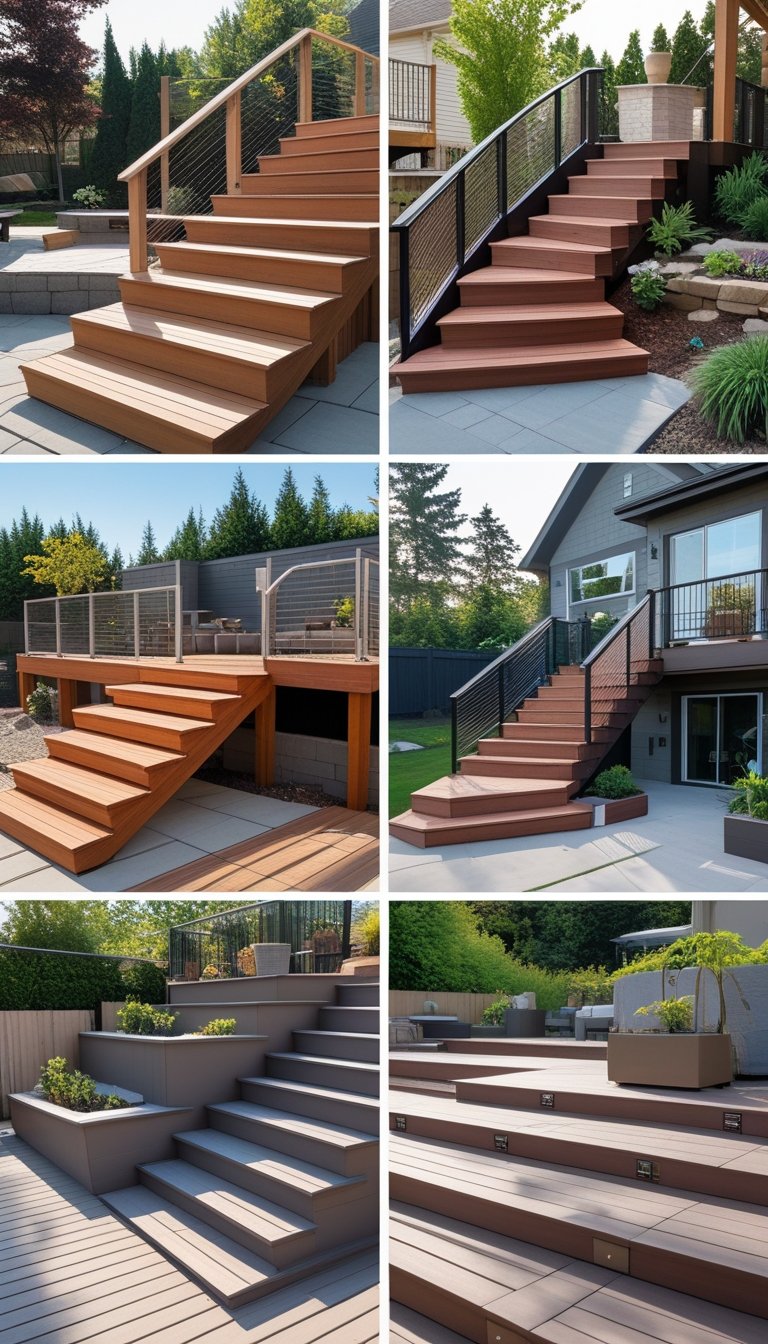
You will explore wide stairs with pause points, compact layouts for small spaces, and landings that handle turns or side doors with ease. You will also see options with built-in seating, lighting, strong materials, and railings that match your deck style. Each idea helps you plan stairs that fit your space and meet real needs.
1) Wide stairs with a mid-landing for a safe pause point
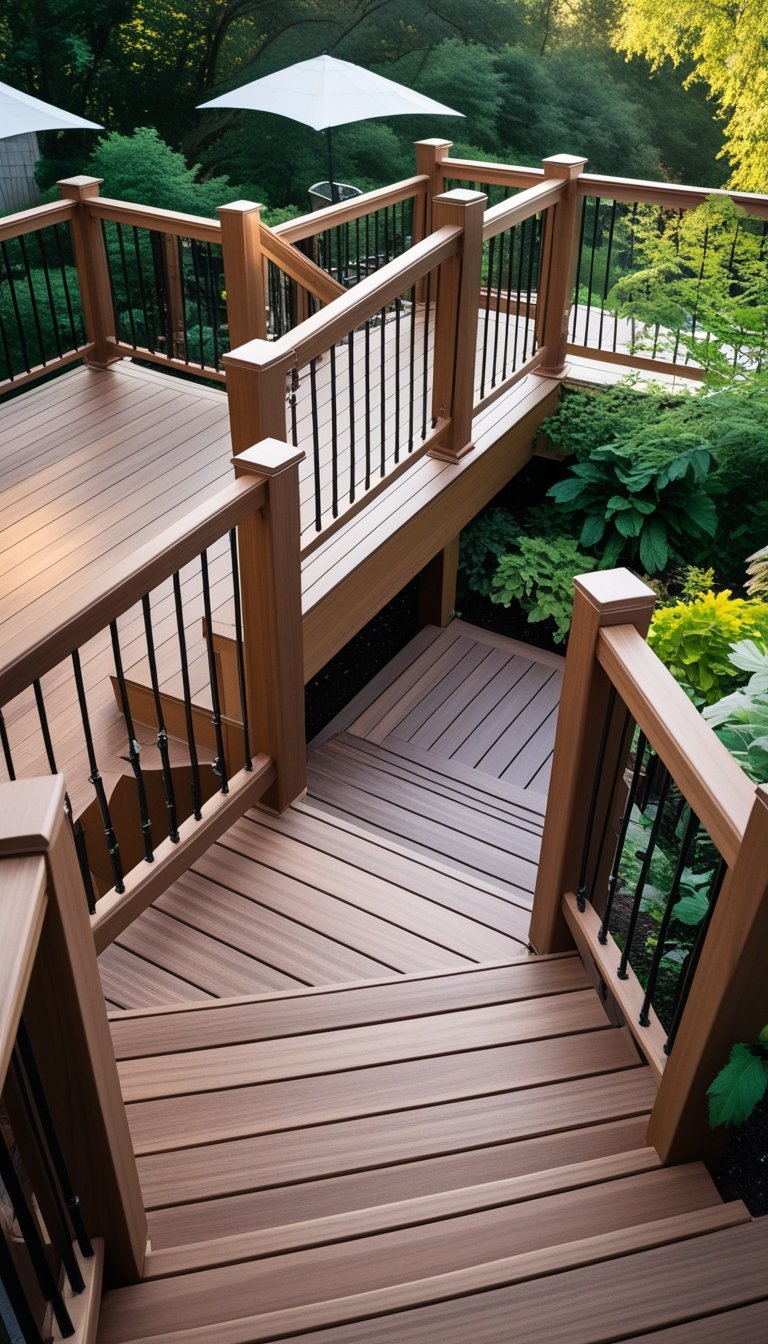
Choose wide stairs and add a mid-landing to create a safe pause point. You improve comfort and control foot traffic.
Follow basic deck stair code standards for rise and run. Size the landing at least 36 inches deep in the direction of travel, as noted in common stair landing dimensions.
2) Spiral stairs descending into the garden for compact elegance
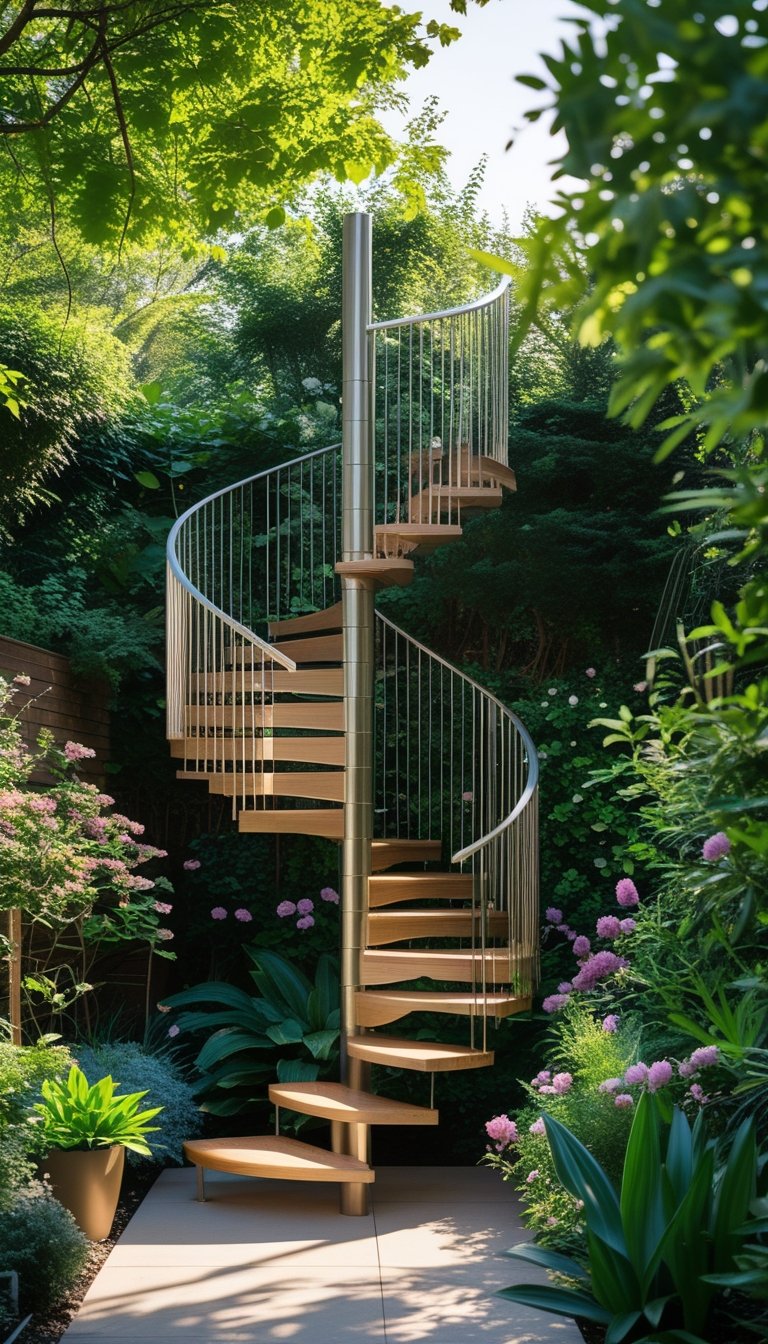
Choose spiral stairs when you need to save space. They fit well on small decks and tight landings.
You can guide guests from your deck straight into the yard with spiral stairs descending into the garden. The curved shape adds style while keeping the footprint small.
3) Multi-level stairs with 45-degree angled turns and landings
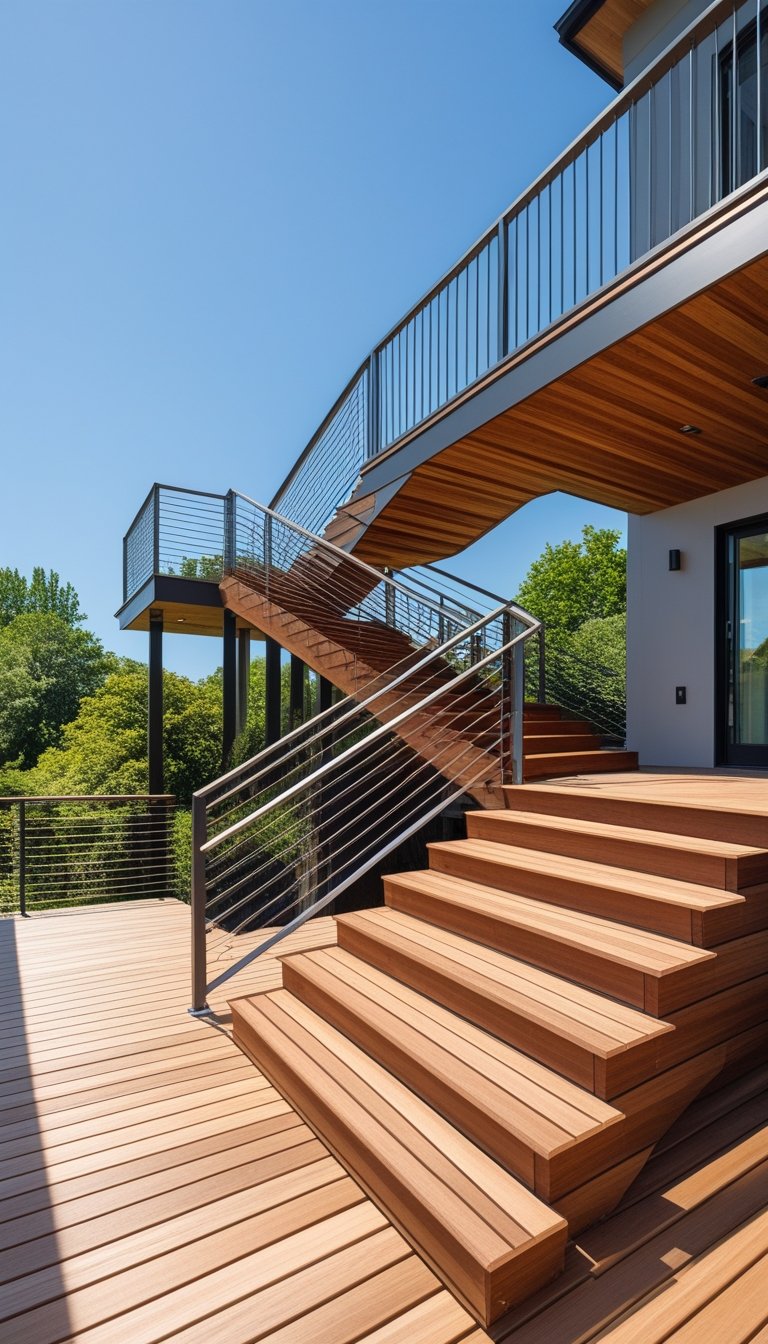
You can add depth to your deck with multi-level stairs that turn at 45 degrees. This layout works well when you need to guide traffic toward a side door or patio.
A small landing at each turn improves safety and flow. Learn more from these deck stairs and steps designs with angled cuts.
Check local code before you build. Review basic rules for stairs and landings layout and height.
4) Landing with integrated seating for functional outdoor space
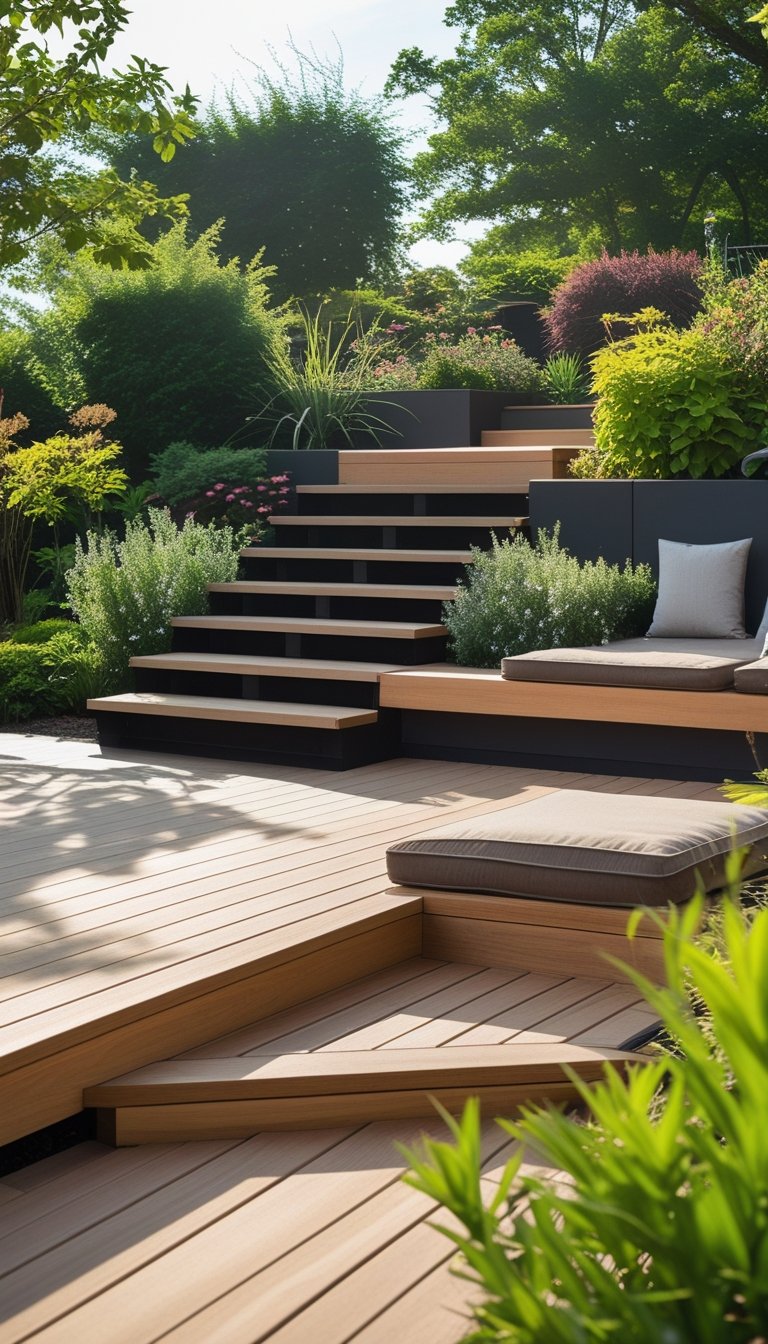
Build bench seating into your stair landing to save space and add function. You create a clear spot to sit without adding extra furniture.
Keep the landing at least as wide as the stairs for comfort and safety, as shown in this deck stairs with landing layout approach.
Add built-in lighting under the seat to improve visibility and style, like ideas shown in these elegant and functional deck stairs.
5) Curved deck stairs featuring a landing for smooth transitions
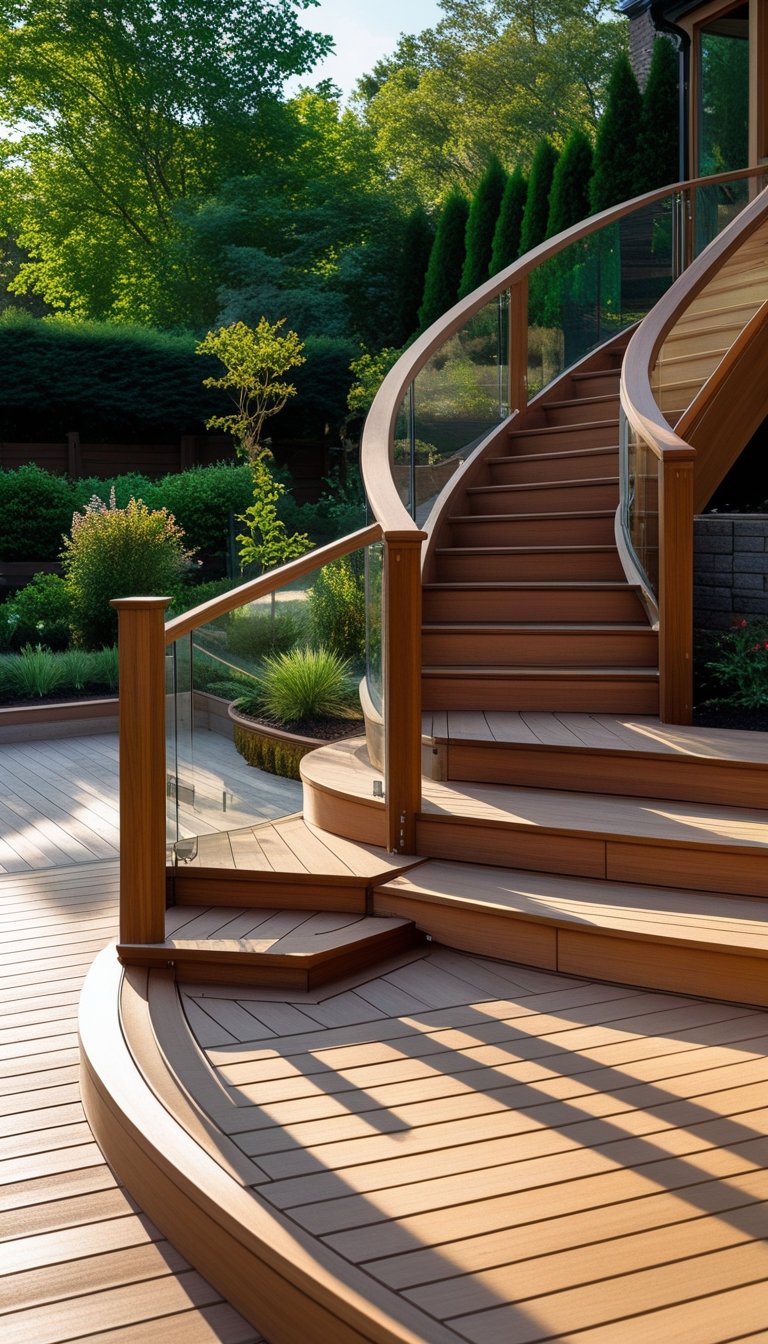
You can use curved deck stairs to create a softer path from your deck to the yard. The curved shape guides movement and reduces sharp turns.
Add a landing at the base or mid-point to improve safety. Review key details in this guide on designing deck stairs with a landing.
Curved layouts require careful planning. Follow clear steps outlined in this overview of how to build curved stairs for a deck.
6) Landing placed at the change of stair direction for flow
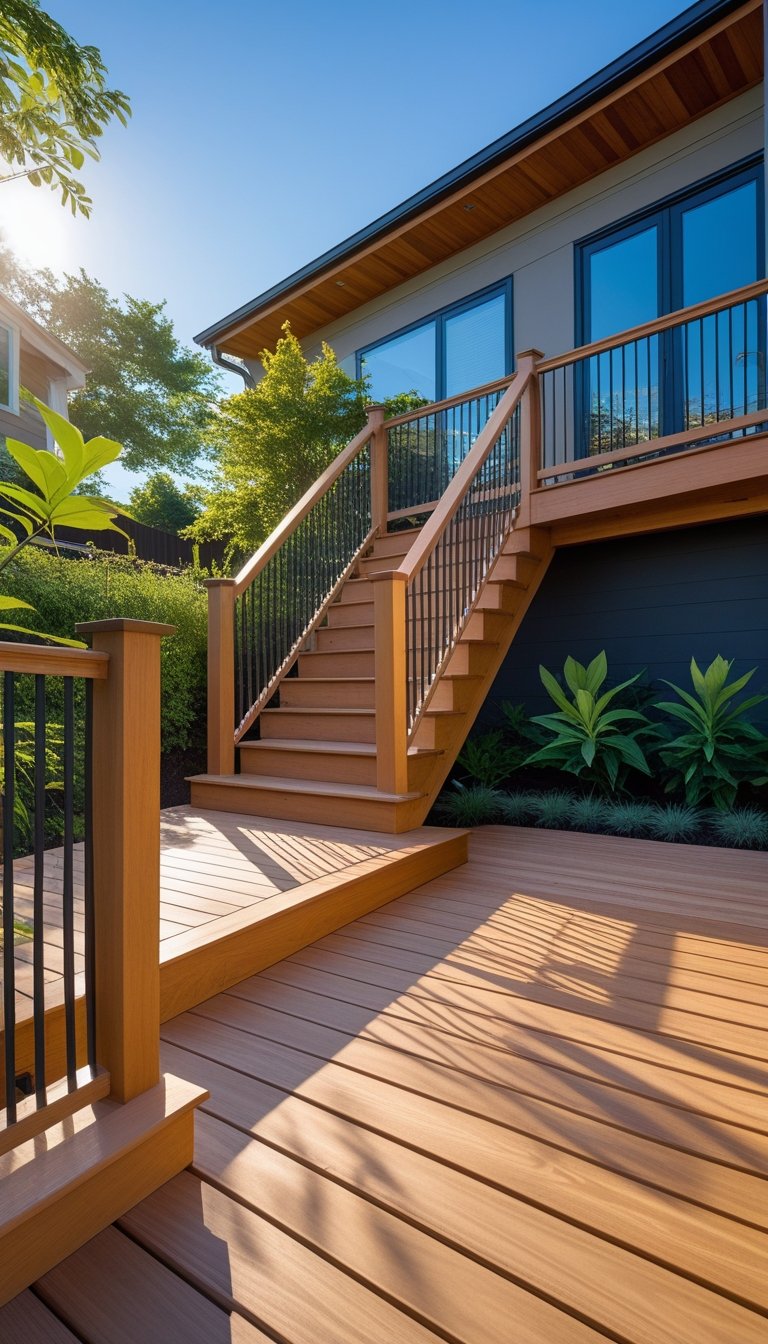
Place a landing where your stairs change direction. You improve traffic flow and create a safe pause point.
This layout works well for L-shaped or switchback stairs. Review common landing types in a staircase to guide your design.
Frame the landing solidly and support the stringers with proper footings. Follow basic deck stairs and landings guidelines to meet code.
7) Wide stairs with multiple landings for raised decks
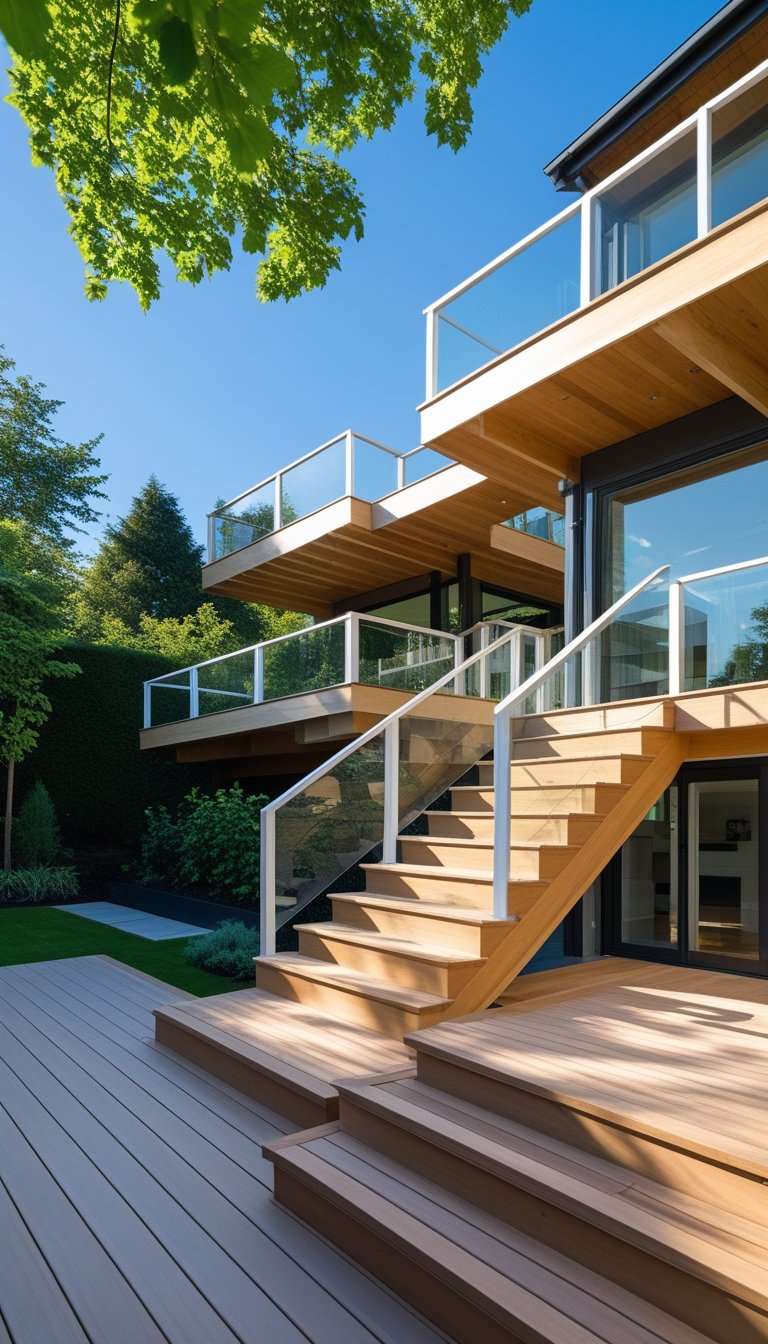
You need wide stairs when your deck sits above grade. They create safer access and allow smoother movement between levels.
Add landings to break up long runs. Tiered landing deck stairs improve flow and safety, as shown in these tiered landing deck stairs ideas.
Keep risers even and treads deep for comfort.
8) Landing designed to accommodate side doors or entrances
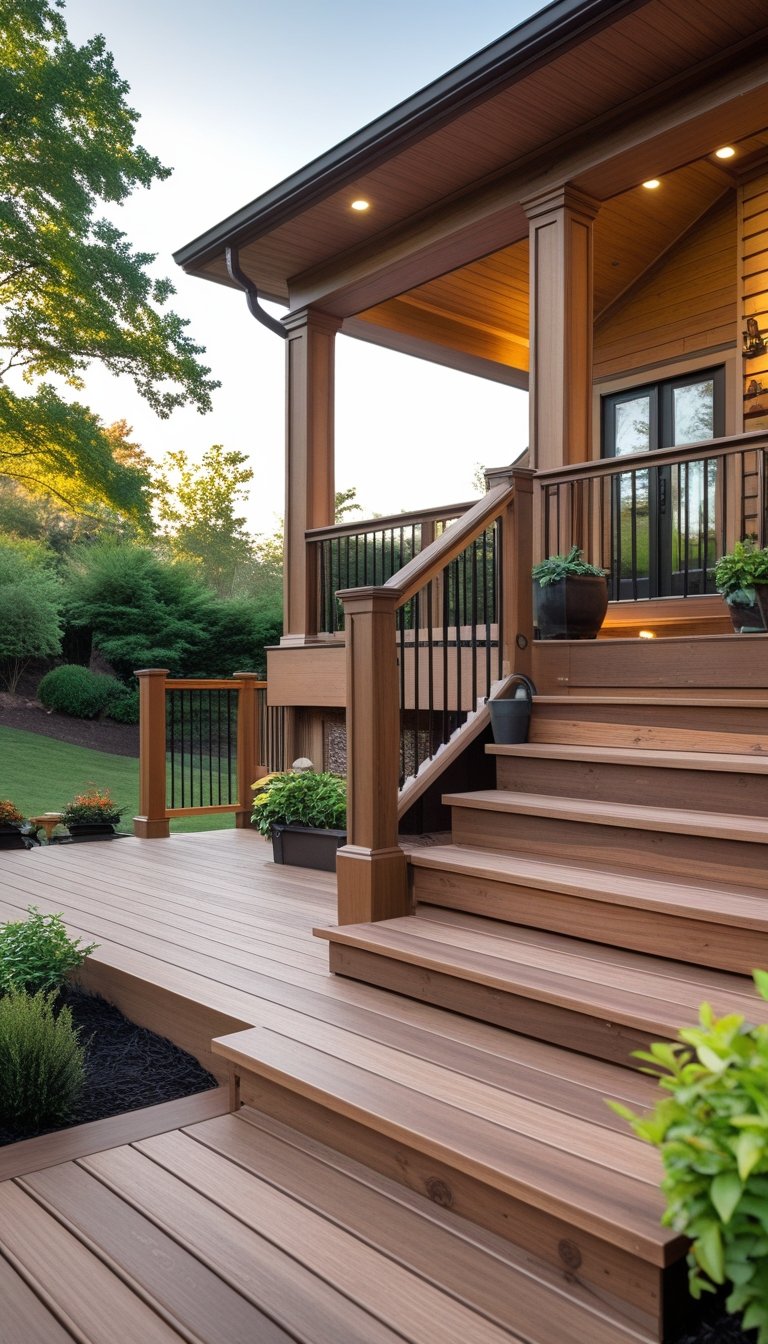
You can design a landing that lines up with a side door for easy access. This layout works well when the door sits along the deck’s edge.
Many builders add a second landing to handle tricky door placement, as shown in these deck stairs with multiple landings. Keep the landing wide and level so the door can open without blocking the stairs.
9) Stair landing spanning a 3-foot 8-inch wide stairway
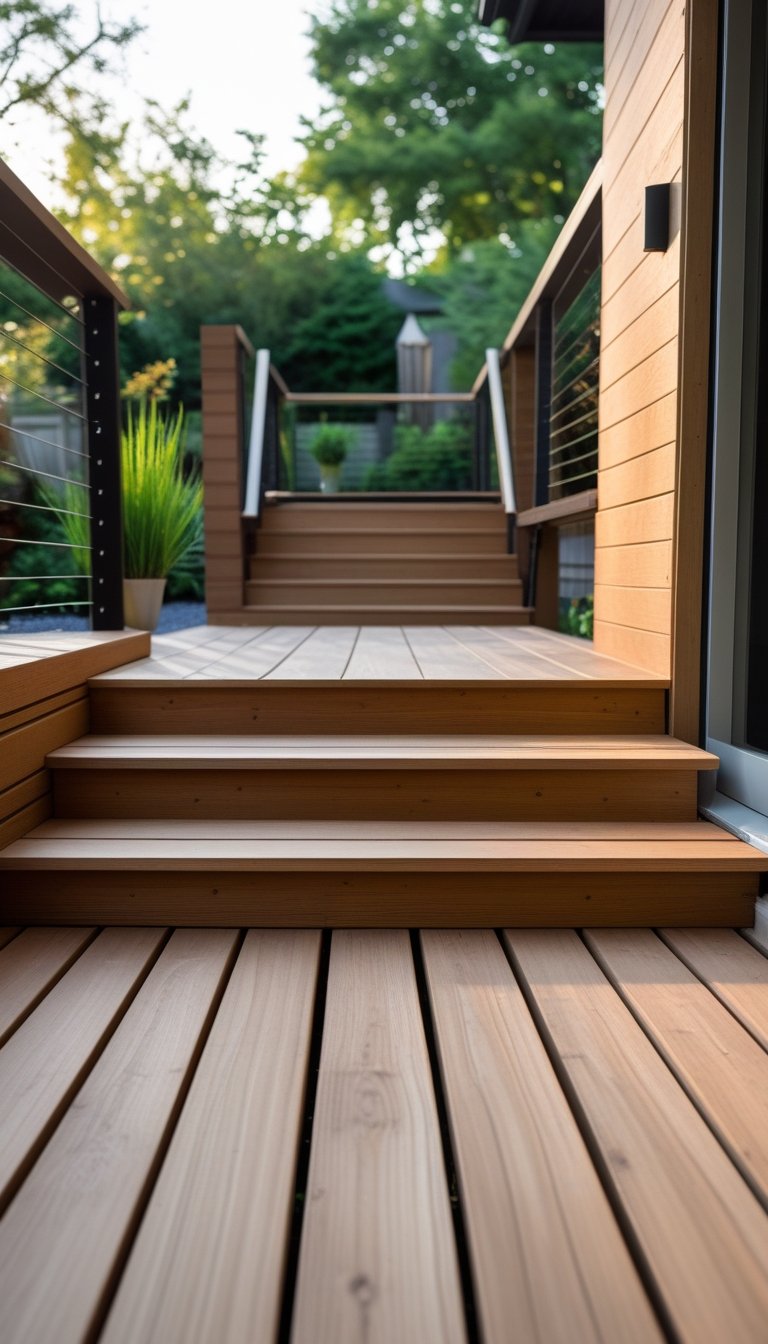
Build a landing that matches your 3-foot 8-inch stair width for full support and safe footing. Size the frame to span the entire stair run.
Follow this guide on how to build a deck stair landing to frame and secure it correctly. Use solid footings and level framing to prevent movement.
10) Landing with built-in lighting for nighttime safety
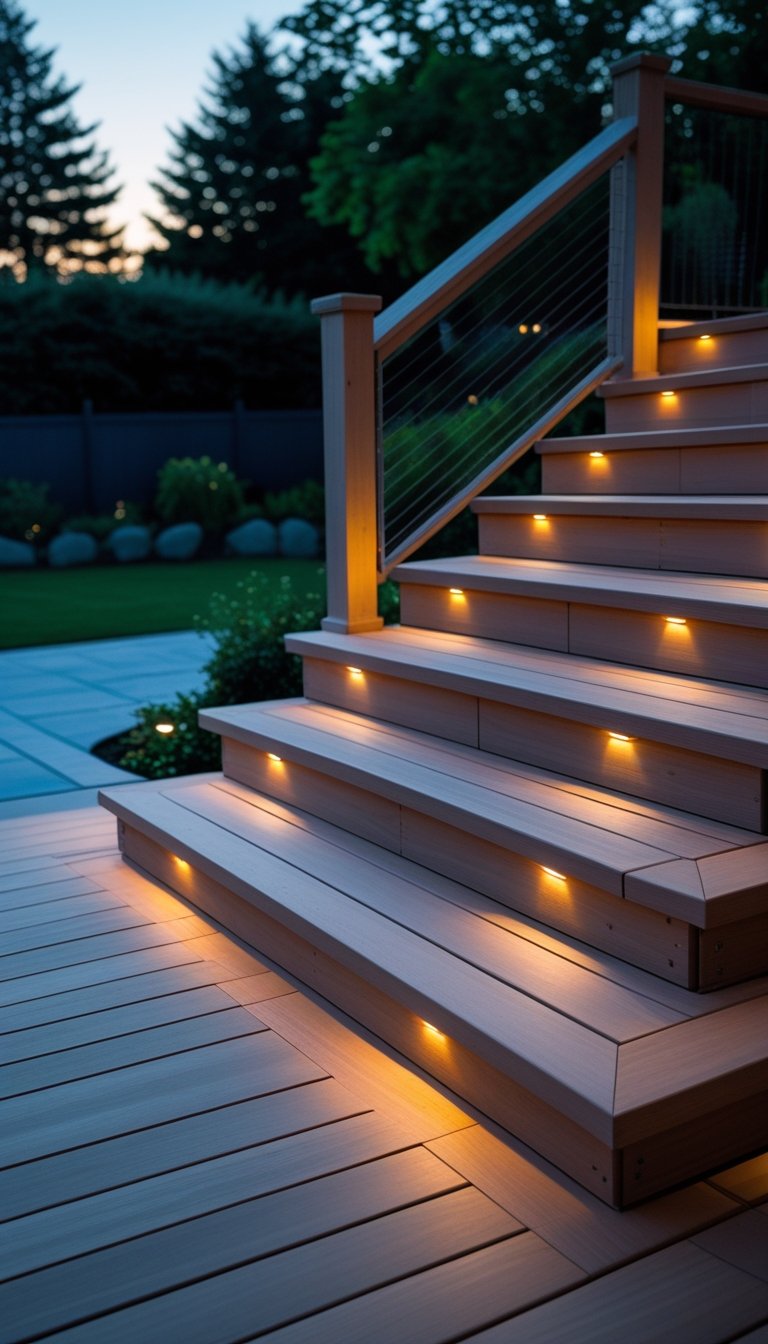
Add recessed lights to your stair landing to improve visibility after dark. You reduce trips and make each step easier to see.
Install low-voltage fixtures along risers or the landing edge. Many homeowners use outdoor step lights for deck safety and design to balance function and clean style.
11) Use of durable, weather-resistant materials for landings
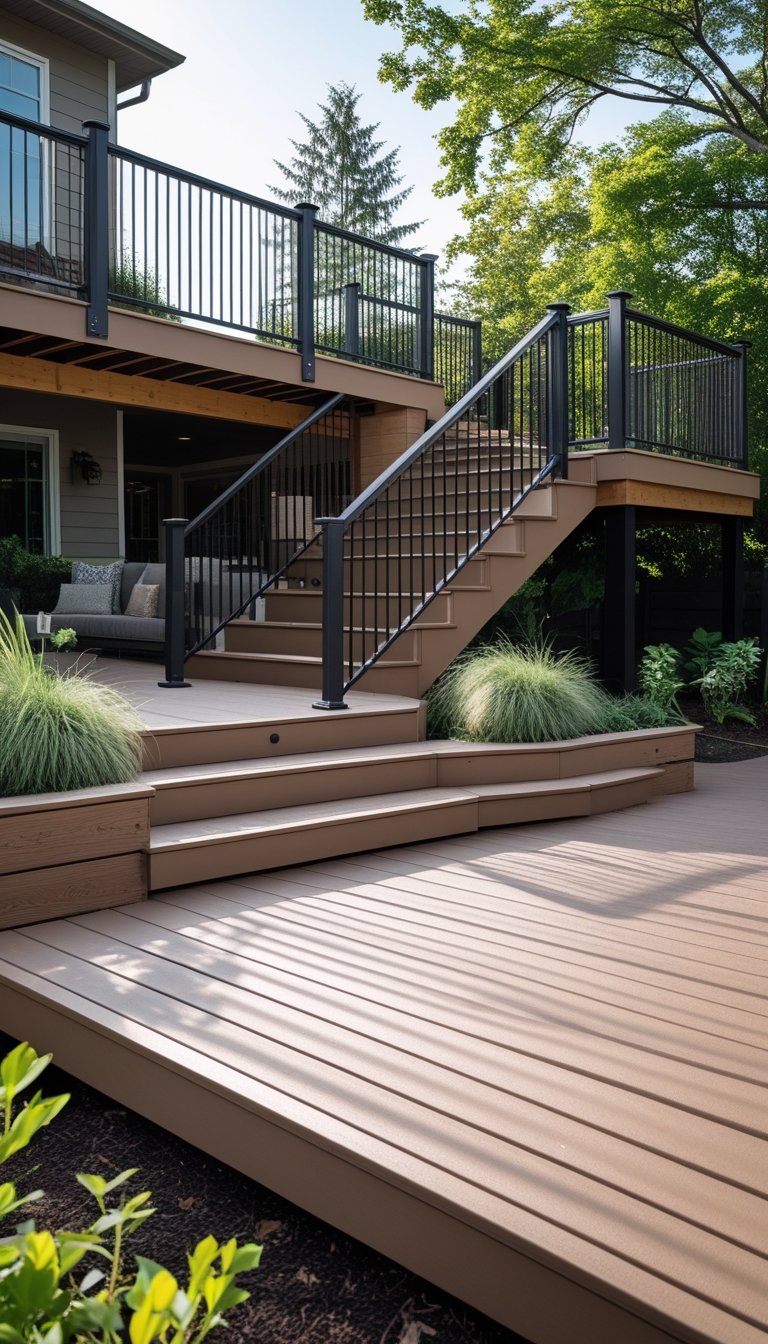
Choose materials that resist moisture, rot, and wear. Treated lumber, composite decking, and metal hold up well outdoors.
Many builders suggest using durable, weather-resistant materials for longer life. You can also consider pavers or bricks, which offer deck stair landing options that handle foot traffic and weather.
12) Compact landing between short flight stair sets
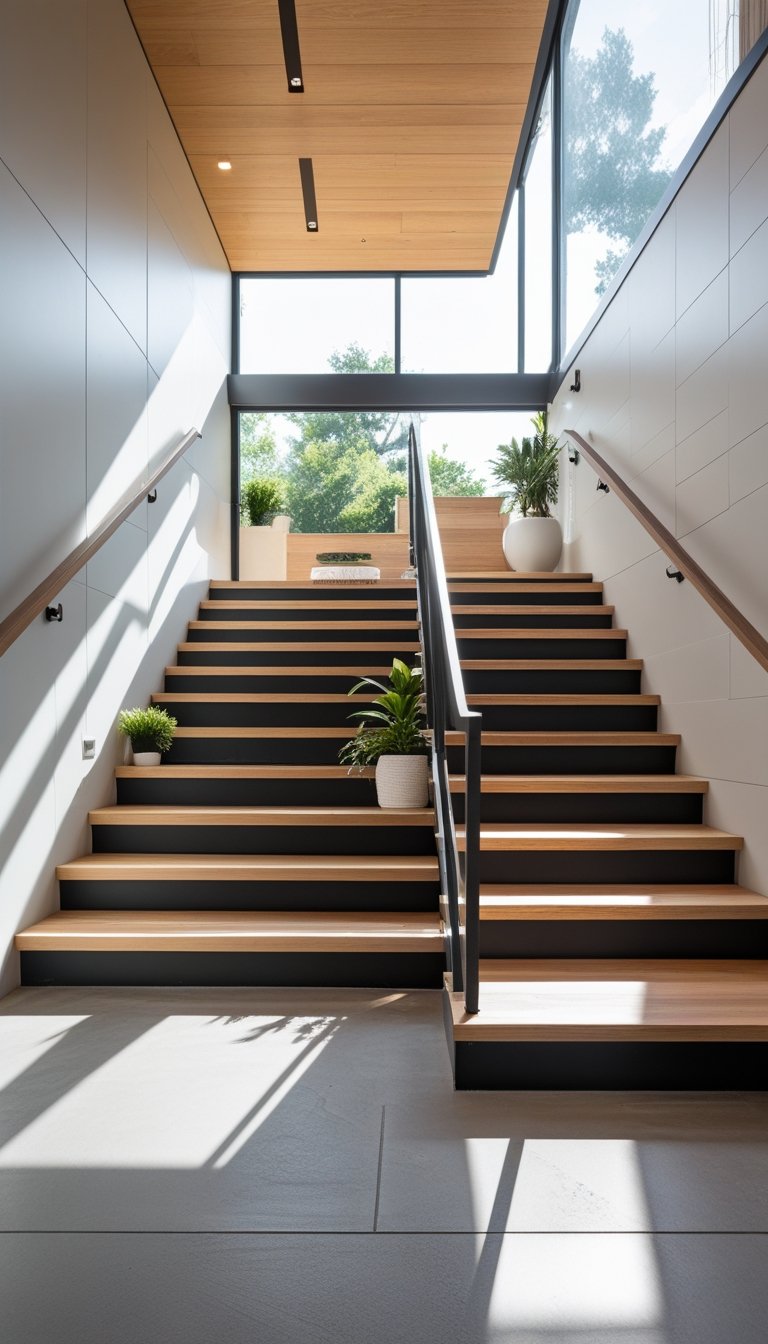
Use a compact landing to split your deck stairs into two short runs. This layout reduces steepness and improves balance.
A small platform also lets you change direction. Review key safety and layout tips in this guide to stairs with landings.
13) Landing with railing matching deck style for consistency
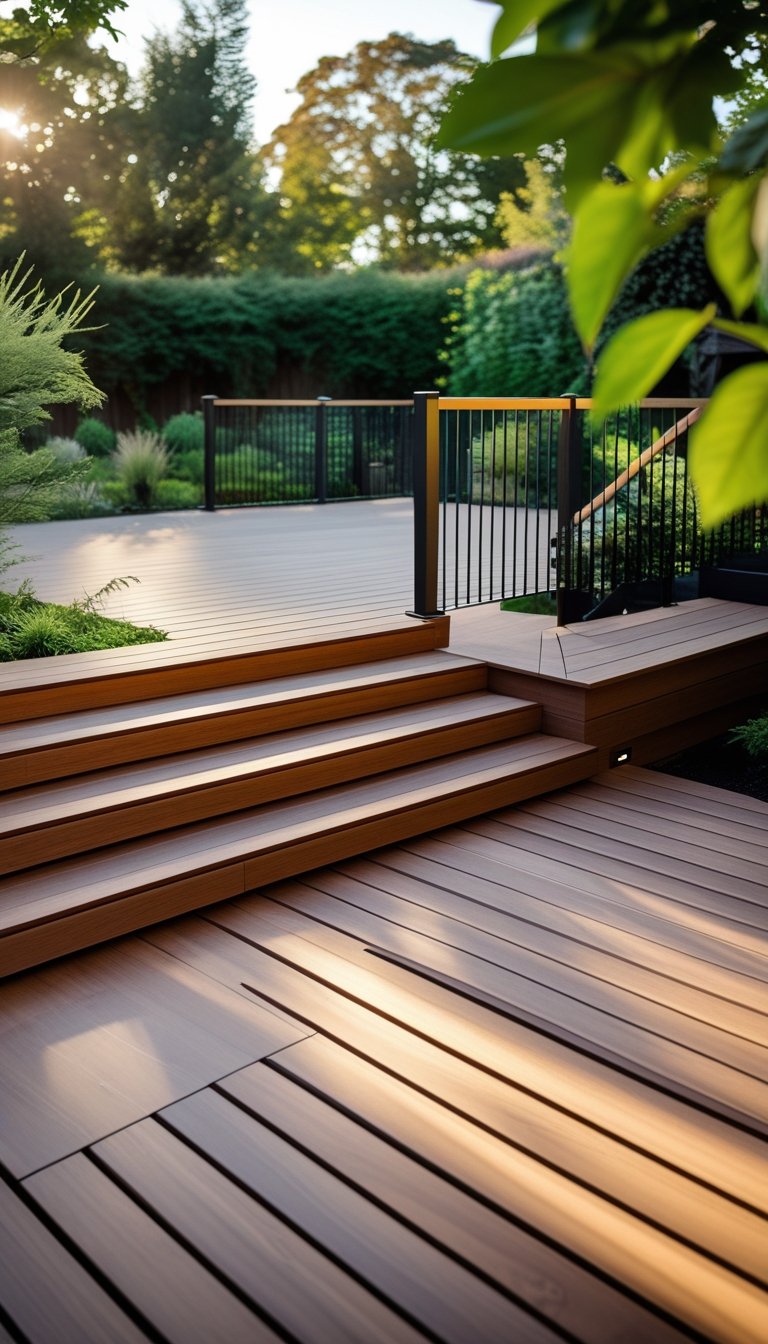
Match the landing railing to your main deck railing. Use the same material, color, and post style.
This keeps the design consistent and clean. Homes with raised decks often need railings for safety, especially when building deck stairs and landings.
14) Landing providing a resting spot on long stair runs
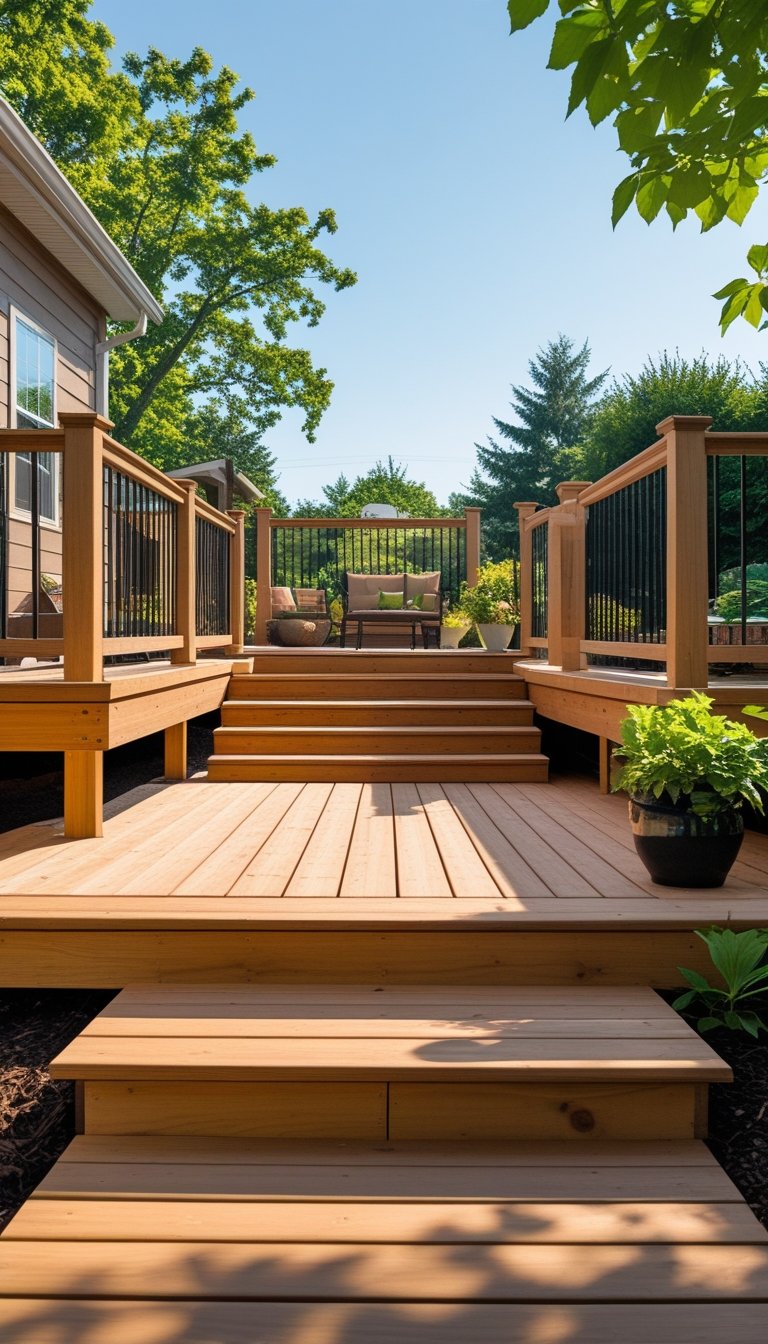
You improve safety when you break up a long stair run with a landing. It gives you a stable place to pause and regain balance.
Many builders use landings to make stairs easier to use, as shown in this guide on stairs with landings. You can also use the landing to change direction or connect to a walkway.
Frequently Asked Questions
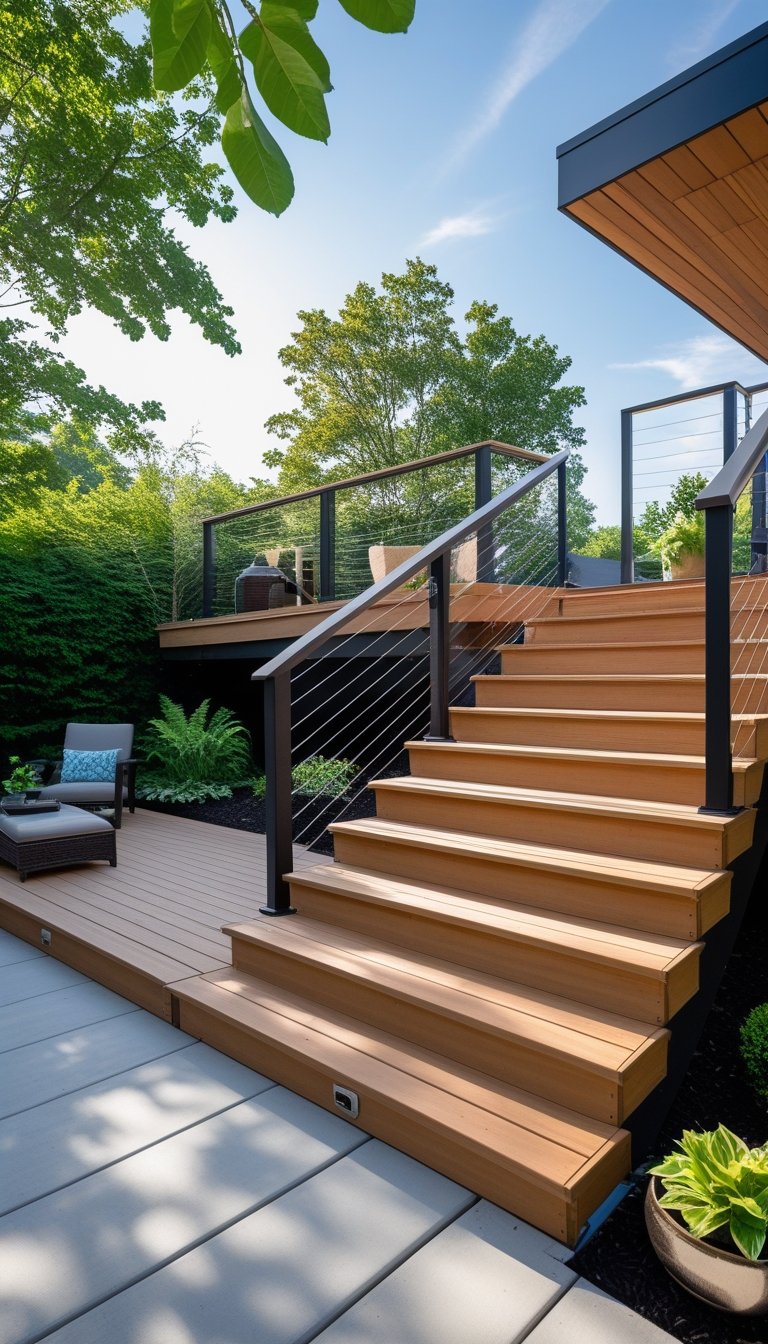
Smart deck stair design depends on layout, landing size, materials, budget, and code rules. You need correct rise and run measurements, solid framing, and safe handrails to build stairs that last.
What are the best stair-and-landing layouts for a deck when space is limited?
You can use an L-shaped stair with a 90-degree turn and small landing to reduce the overall run. This layout fits well along the side of a deck instead of straight out into the yard.
A U-shaped design with a mid-landing also works in tight spaces. It splits the stair run into two shorter sections and gives you a safe pause point.
If space is very tight, spiral stairs can reduce the footprint. They take up less room, but you must check local code rules before you build.
How do you determine the right landing size and placement for deck stairs?
Start by measuring the total rise from the ground to the deck surface. Then divide that number by a consistent riser height to find the number of steps.
Most codes require a landing at the top or bottom of the stairs. Many builders also add a mid-landing on long runs to create a safe pause point, as explained in this guide on designing deck stairs with a landing.
Place the landing where the direction changes or where users need space to step off safely. Make the landing at least as wide as the stairs.
Which materials work best for building durable, low-maintenance deck stair landings?
Pressure-treated lumber remains a common choice because it resists rot and insects. You must seal or stain it to extend its life.
Composite decking boards reduce maintenance since they do not need regular staining. They resist moisture and surface wear better than standard wood.
Concrete works well for ground-level landings. It provides a solid base and handles heavy foot traffic with little upkeep.
What are budget-friendly design options for adding a landing to deck stairs?
You can frame a simple square landing using the same lumber and decking as the main deck. This keeps materials consistent and lowers costs.
Placing stairs along the side of the deck can reduce railing length and simplify framing. Some homeowners prefer this approach because it makes stairs less of a focal point, as shown in these deck step, stair, and landing ideas.
You can also keep the landing plain and skip built-in seating or curves. Straight cuts and standard railings cost less than custom shapes.
How can you build deck stairs with a landing as a DIY project while keeping them structurally sound?
Measure carefully before you cut stringers. Keep riser height and tread depth consistent from top to bottom.
Use solid footings under the landing to prevent settling. Anchor posts securely and fasten all connections with approved hardware.
Follow a clear step-by-step process when building. This guide on how to build deck stairs with a landing outlines key stages such as framing, attaching stringers, and securing treads.
What are the key building-code considerations for deck stairs and landings, including rise, run, and handrails?
Most local codes limit riser height and set a minimum tread depth. You must keep each step uniform to prevent trips.
Handrails are often required when the stair has more than a few risers. Guards may also be required on open sides of stairs and landings.
You should also confirm minimum landing dimensions and headroom clearance. Check your local building department before you build to avoid costly changes later.