
15 Deck Steps With Landing Ideas for Stylish and Functional Outdoor Spaces
Deck steps with a landing do more than connect spaces. They shape how people move from the house to the yard and how they use the deck every day. This guide shows how smart deck steps with landings improve safety, comfort, and the overall layout of an outdoor space.

Homeowners often overlook the landing, yet it can act as a small patio, a seating area, a garden feature, or a smooth side-door transition. The ideas ahead explore different layouts, materials, and design details that help decks feel more open, organized, and practical without adding wasted space.
1) Multi-level deck stairs with interconnected landings

Multi-level deck stairs with interconnected landings create clear zones in a backyard. Each landing acts as a small patio between levels.
Designers often use this layout to define activity areas. These multi-level deck stairs with interconnected landings help manage elevation changes while improving flow.
2) Wide stairs with integrated seating on landing

Wide deck stairs create a smooth path from the deck to the yard. Many homeowners use wide deck steps design ideas to add built-in seating on the landing.
The seating gives guests a place to sit without extra chairs. It also helps define the landing as a usable space.
3) Platform deck landing lower to ground

A platform deck landing set closer to the ground reduces the number of steps needed. It creates easy access and works well for smaller yards.
Many homeowners choose a platform deck that requires only one or two steps to keep the layout simple. This design also allows wider, safer treads.
4) 45-degree angled cuts with small landing

Builders use 45-degree angled cuts to soften sharp deck corners. The angle improves flow and access.
A small landing fits well at a side door or tight yard. It creates a smooth turn and adds usable space.
This layout works well for wraparound deck stairs. Careful measuring and clean cuts keep the lines straight and safe.
5) Landing with built-in planters for greenery

A landing with built-in planters adds structure and plant space in one design. It keeps the area organized and easy to maintain.
Many homeowners choose deck landing ideas with built-in planter steps to combine access and greenery. The planters frame the steps and soften hard edges.
6) Curved deck steps with rounded landing

Curved deck steps with a rounded landing create a smooth transition from deck to yard. They soften sharp lines and add visual interest.
Designers often feature this style in curved staircase ideas. Builders must plan carefully and measure with care.
These steps work well for larger decks and open spaces.
7) Landing as mini patio area

A deck landing can serve as a small patio. It creates a clear transition from the stairs to the yard.
Homeowners can add a bench, two chairs, or potted plants. As shown in deck landing ideas, a well-planned landing improves both function and comfort.
Treat the landing like a small deck. It needs proper framing and solid support, similar to guidance for designing deck stairs with a landing.
8) Deck steps with lighting on landing

Deck steps with lighting on the landing improve safety and visibility. They help people see edges and changes in height at night.
Homeowners often add recessed LEDs or strip lights along the landing edge. Many designs featured in deck step lighting ideas show clean, low-profile fixtures that blend into the boards.
Soft lighting creates a clear path without glare. It also highlights the shape of the steps and landing.
9) Landing designed for side door transition

A side door often needs a smart landing to connect it to the deck. A small platform creates a safe, level step before stairs begin.
Designers often add angled cuts and multiple levels to fit tight spaces. This approach appears in many deck stairs and landing ideas and works well for narrow side yards.
The landing can also shift stair direction. This layout improves traffic flow and keeps the door area clear.
10) Landings with weather-resistant flooring

Weather-resistant flooring helps deck landings handle rain, sun, and foot traffic. Builders often choose sealed wood, composite boards, or exterior tile for strength and low upkeep.
Many outdoor deck stair styles with landings use durable finishes to protect timber steps. A quality sealant also reduces wear and surface damage over time.
11) Landings creating zones for different activities

Landings can define clear zones on a large deck. They break up long stair runs and improve safety during elevation changes, as shown in these deck steps ideas for distinct zones.
A mid-level landing can hold chairs or planters. It creates space to gather without blocking traffic.
12) Floating deck stairs with cantilevered landing

Floating deck stairs with a cantilevered landing create a clean, open look. The landing extends past its support to give the stairs a light appearance.
Designers often use metal stringers or hidden brackets for strength. Some exterior floating stair ideas show how steps can anchor on one side.
Builders must secure framing well and follow local codes.
13) Landing with storage benches

A landing with storage benches adds seating and hidden space. It keeps tools, cushions, or toys out of sight but easy to reach.
Many deck bench ideas for stylish seating and smart storage show built-in designs that fit along railings. Some landings also use expanded areas for benches, as seen in creative deck stair and landing designs.
14) Steps with railings enclosing landing

Steps with railings that enclose the landing improve safety and structure. They create a defined path and help prevent falls, especially on raised decks.
Many homeowners choose classic enclosed styles with crisp rail details, similar to these traditional deck landing ideas. Wood or composite railings both work well when installed securely.
15) Landing featuring decorative tile insets
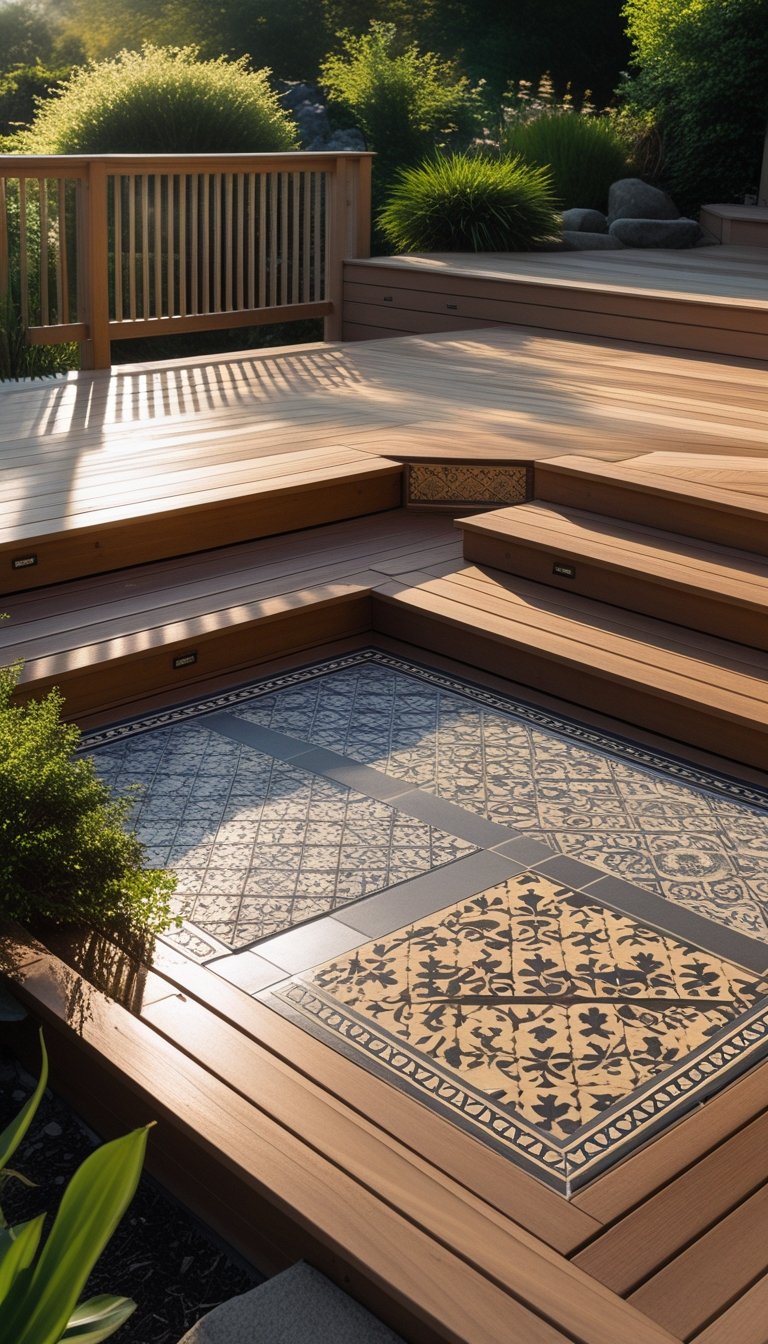
A landing with decorative tile insets adds detail without changing the full deck surface. It creates a clear focal point at the transition between steps and yard.
They can frame the landing edge or form a simple pattern in the center. Homeowners often pair tile with wood decking for contrast and easy cleaning.
Frequently Asked Questions

Proper stair design depends on correct rise and run measurements, solid landing support, and smart layout choices. Shape, width, and structure all affect safety, drainage, and how well the stairs fit small or sloped yards.
How do you build deck stairs that include a mid-landing?
They start by measuring the total height from the deck surface to the ground. They divide that height by the desired riser height, usually between 7 and 7.75 inches, to find the number of steps.
For a mid-landing, they break the stair run into two sections. They frame a level platform between the sections and support it with posts set on concrete footings.
Builders treat the landing like a small deck. It needs joists, proper spacing, and secure attachment to the house or main deck frame.
Guides on designing deck stairs with a landing explain that landings improve safety at doors, turns, and long stair runs. A mid-landing also reduces fatigue on a 15-step staircase and makes multi-level layouts easier to use.
What stair rise and run dimensions are recommended for a 15-step outdoor deck staircase?
Most codes recommend a maximum riser height of about 7.75 inches and a minimum tread depth of 10 inches. Many builders aim for a 7 to 7.5 inch rise with an 11 inch tread for outdoor comfort.
For a 15-step staircase, they keep every riser the same height. Even a small change between steps can cause trips.
They also check local building codes before cutting stringers. Consistent dimensions matter more than steep or shallow stairs.
What are the most common mistakes to avoid when framing and supporting a stair landing?
One common mistake is failing to install proper footings below the frost line. Without solid support, the landing can shift or settle.
Another issue is attaching the landing only to the stair stringers. The landing needs its own posts and beams, just like a deck.
Some builders skip diagonal bracing. That can lead to wobble over time. They should also slope the landing slightly away from the house to prevent water buildup.
Step-by-step guides such as how to build deck stairs with a landing stress careful layout and precise cuts to avoid uneven stairs and weak joints.
What landing shapes and layouts work best for small decks with limited space?
A small square or rectangular platform works well for tight areas. It provides a safe transition without taking up much yard space.
An angled landing, such as a 45-degree layout, can redirect traffic along the side of the deck. This design helps when space does not allow straight stairs.
Low platform decks also work for short heights. Some homeowners use platform deck step and landing ideas to create usable space close to the ground.
What are effective design options for wide deck steps to improve safety and curb appeal?
Wide steps allow two people to walk side by side. They also create a gradual transition from the deck to the yard.
Some designs add integrated seating along the landing. This feature works well with wide stairs and supports social use.
Design galleries that highlight deck stair ideas to elevate your outdoor space often show wide stairs with lighting, clean lines, and strong railings. These features improve visibility and define the edge of each step.
What are good alternatives to traditional straight deck stairs for tight or sloped yards?
Switchback stairs with a mid-landing reduce the length of a straight run. They work well on steep slopes.
Wraparound stairs connect different sides of the deck. This layout spreads foot traffic and fits narrow yards.
Floating steps or open riser designs can create a lighter look. Collections of creative deck stairs ideas show options like angled stairs and staggered layouts that adapt to uneven ground.

