
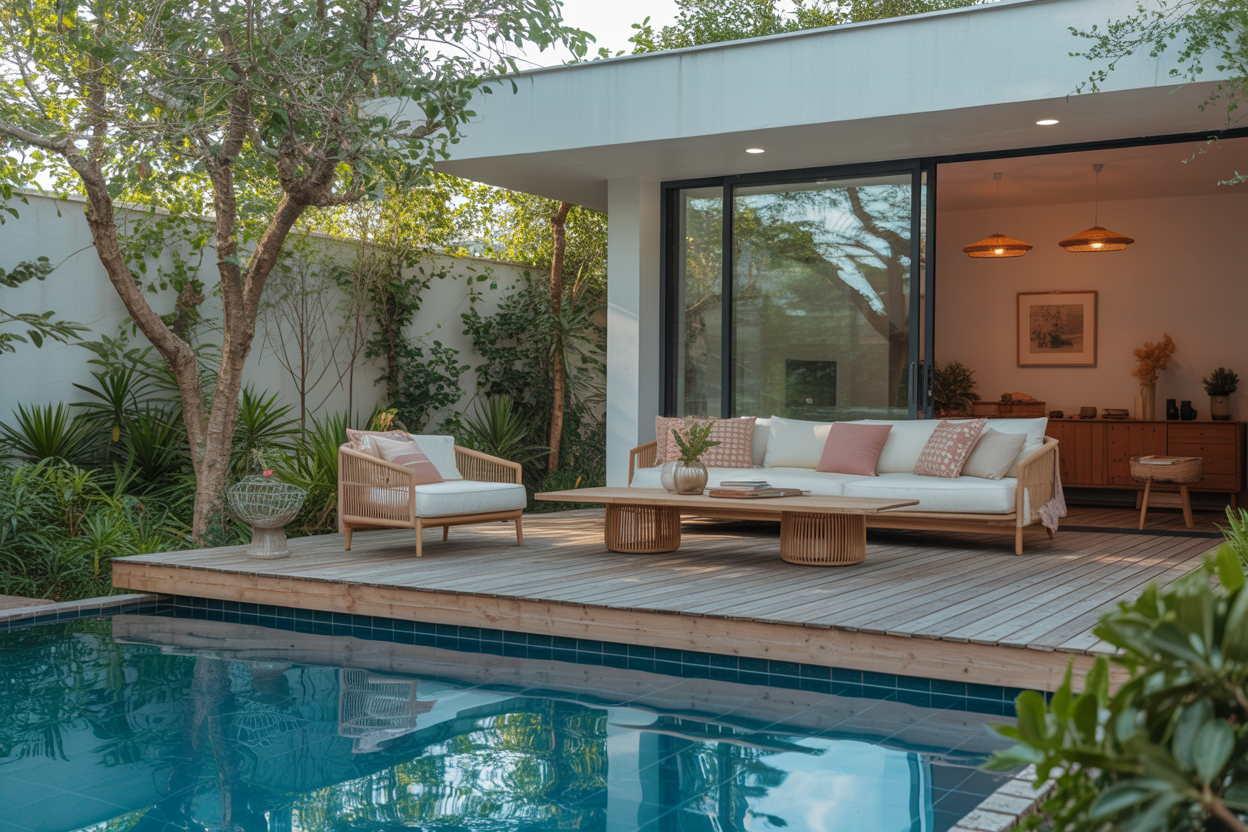
15 Low Deck Ideas Ground Level for Stylish and Functional Outdoor Spaces
You want an outdoor space that feels open, useful, and easy to enjoy. Low deck ideas at ground level help you shape your yard without major changes or high costs.
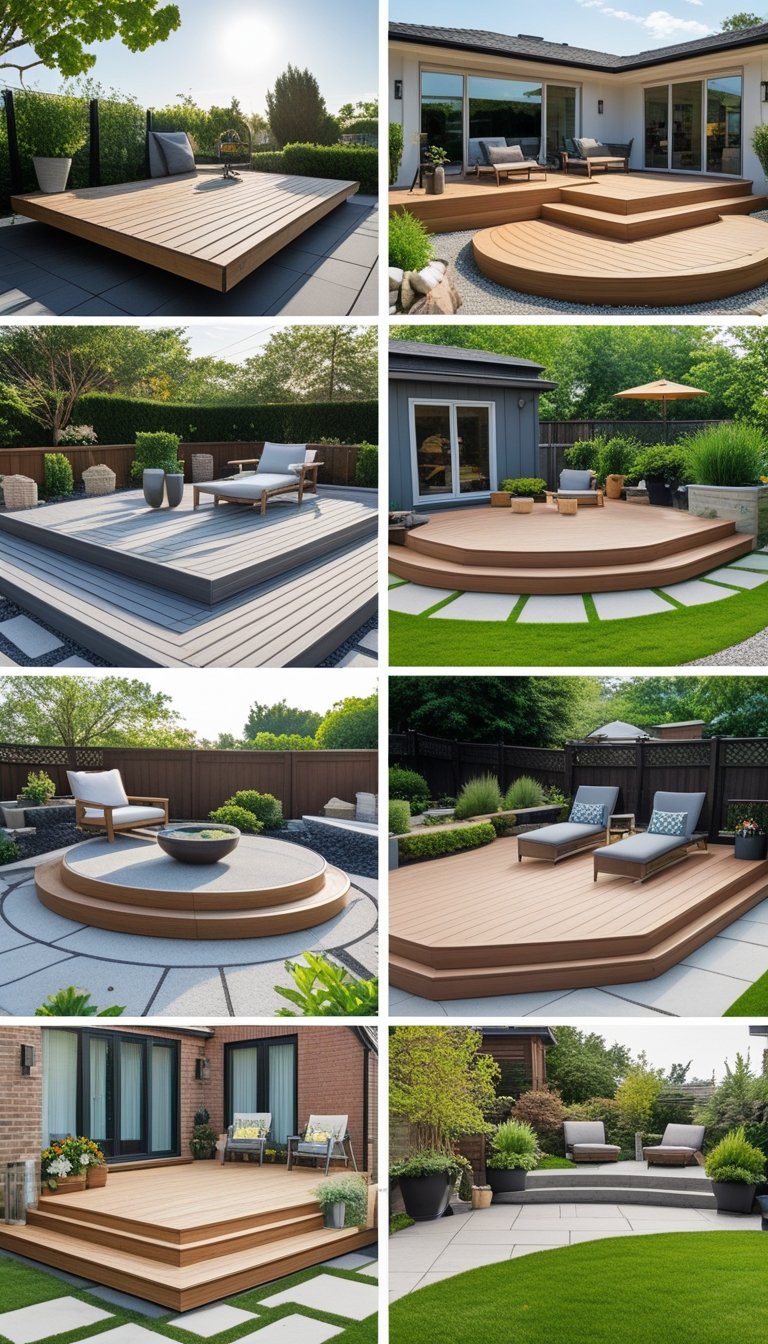
These 15 low deck ideas show you how to turn plain ground into a clean, functional outdoor living area that fits your space and budget. You will see smart layouts for small corners, shaded spots, uneven yards, and simple builds that add comfort without adding height.
1) Floating platform deck with integrated fire pit
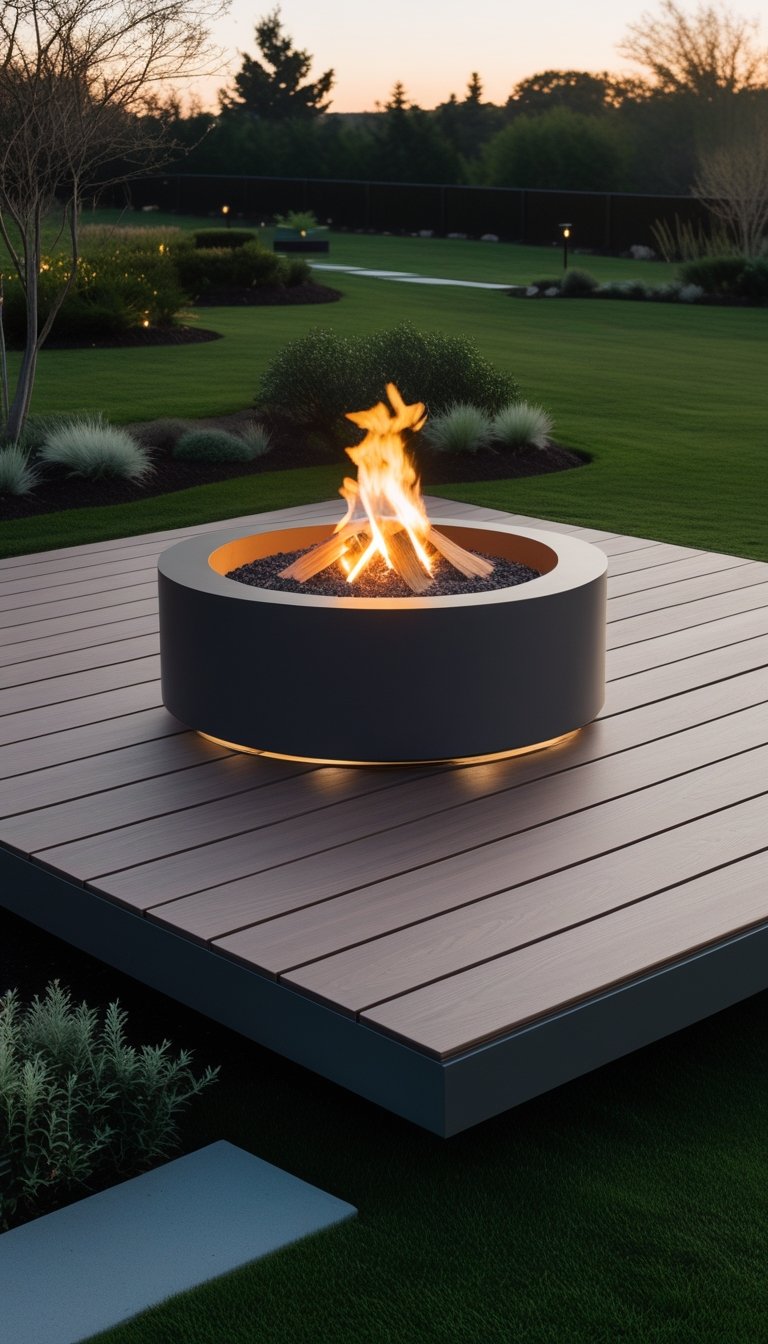
Build a floating platform deck that sits directly on the ground. It does not attach to your home and creates a clean, simple layout.
Add a built-in fire feature to make it a true ground-level deck with a fire pit. Center the fire pit and arrange seating around it for clear traffic flow.
Use composite or pressure-treated lumber for durability. Keep the deck low to maintain easy access and a modern look.
2) L-shaped ground-level deck for awkward corners
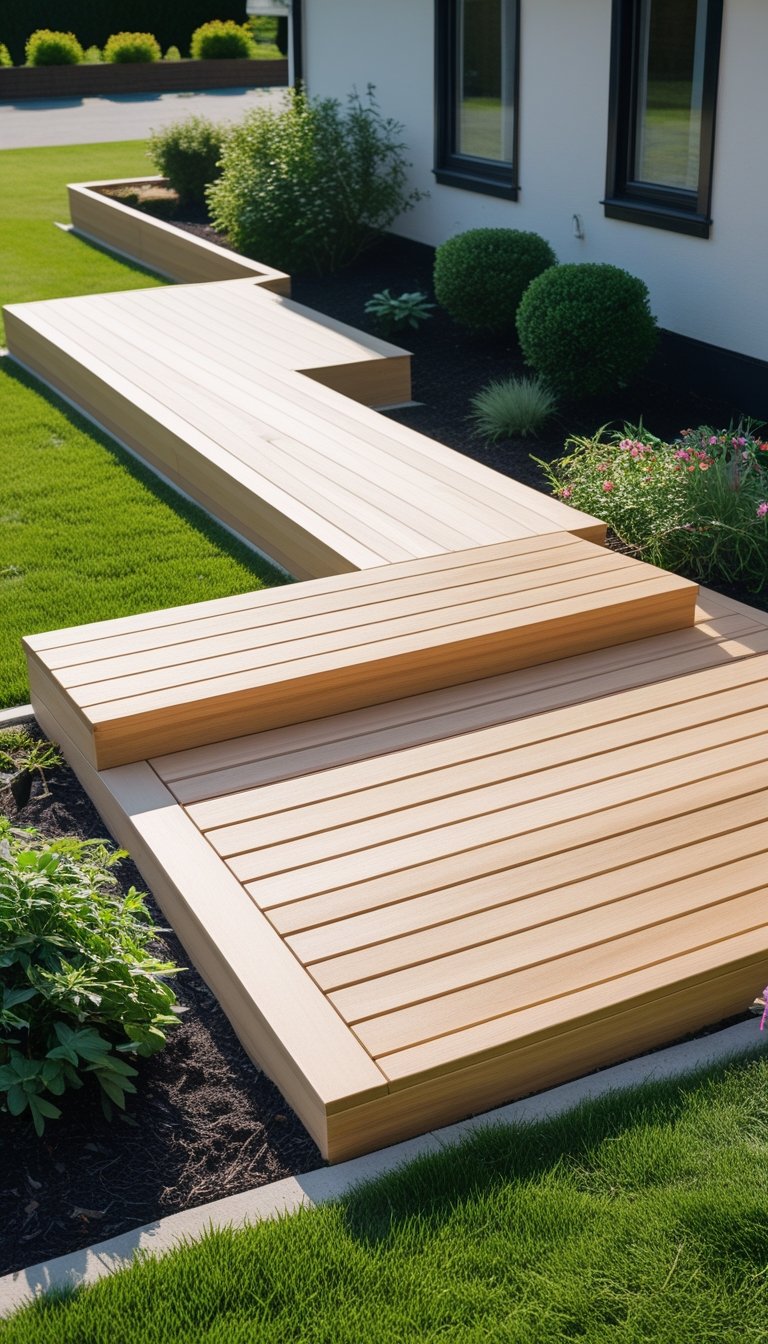
Use an L-shaped ground-level deck to turn an unused corner into a clear, usable space. It fits along two sides of your yard and creates a natural layout.
This shape works well for awkward backyard corners where space feels tight. You can place seating on one side and a small table on the other.
An L-shape also helps define zones without walls. It makes the corner feel planned and easy to use.
3) Low deck with built-in benches for seating
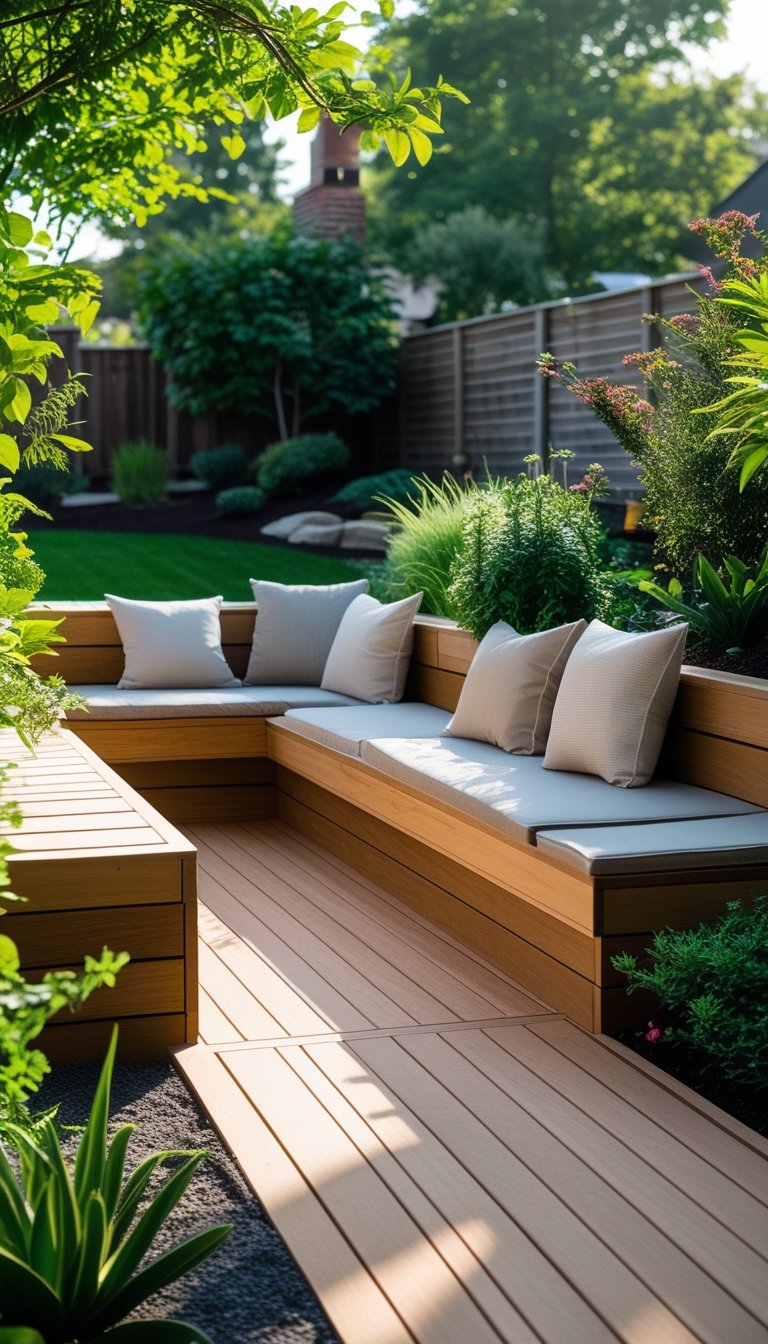
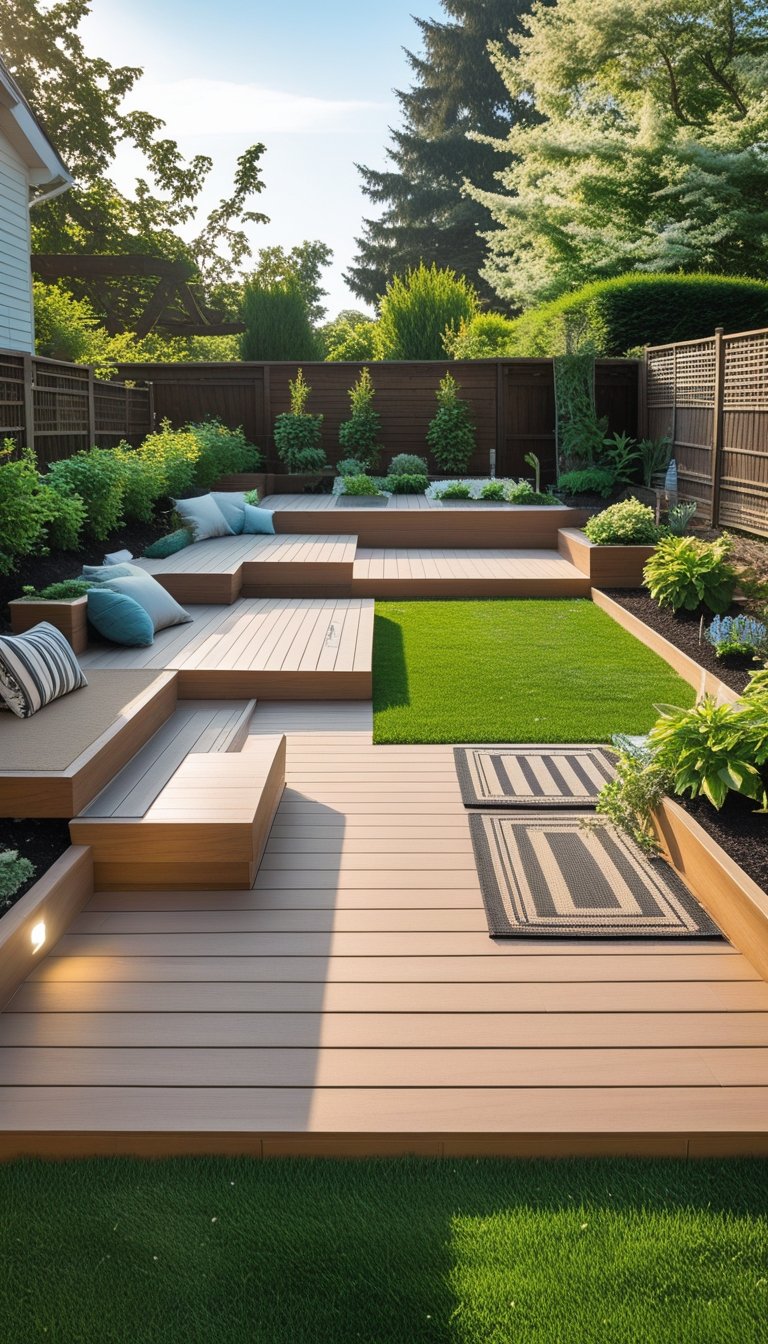
Add built-in benches to your low deck to create seating without crowding the space. You keep the center open while giving guests a clear place to sit.
Built-in seating works well on small decks. Many built-in deck bench ideas show L-shaped and wraparound layouts that define the edge.
You can add storage under the seats. This keeps cushions and tools out of sight.
4) Deck with pergola for shaded comfort
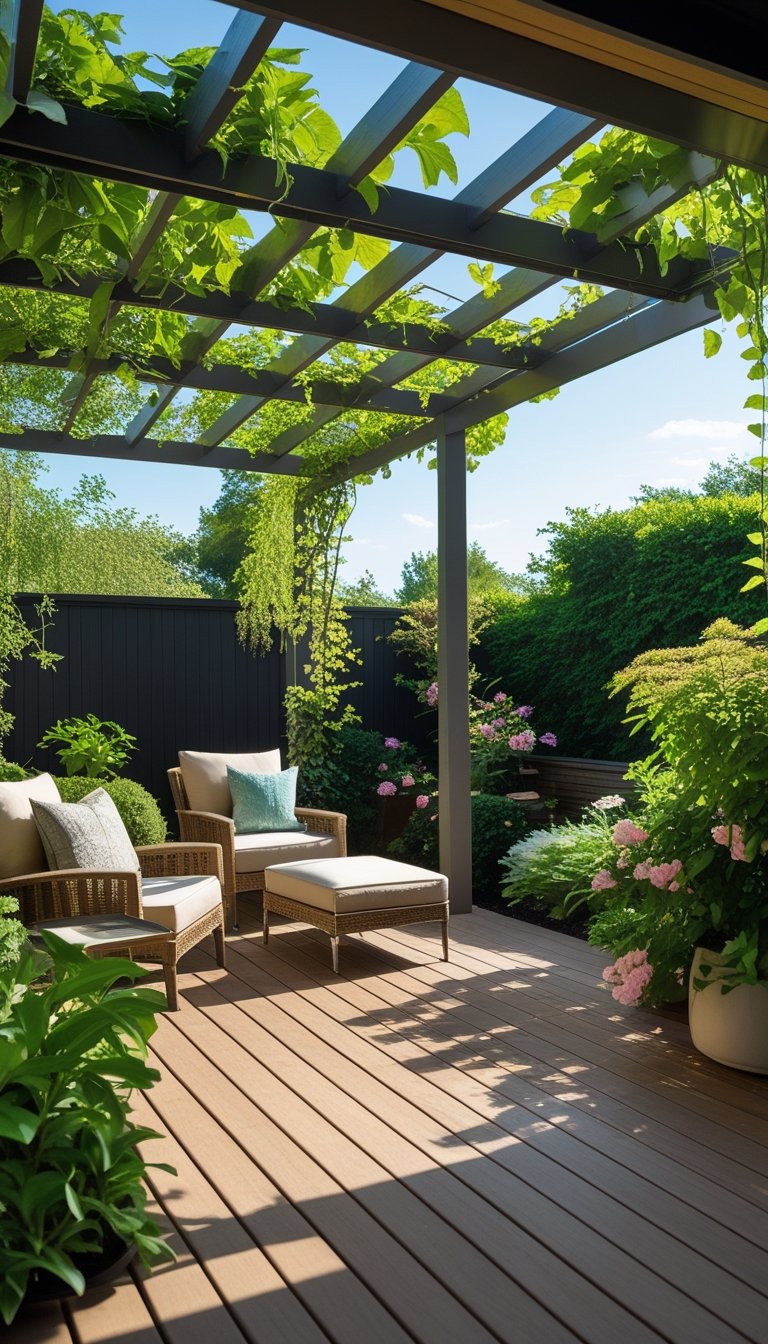
Add a pergola to your ground-level deck to create steady shade and clear structure. You control sun and airflow without closing in the space.
Explore these deck with a pergola ideas to shape a dining or seating area. Use wood or aluminum posts for lasting support and clean lines.
5) Multi-tiered ground-level deck design
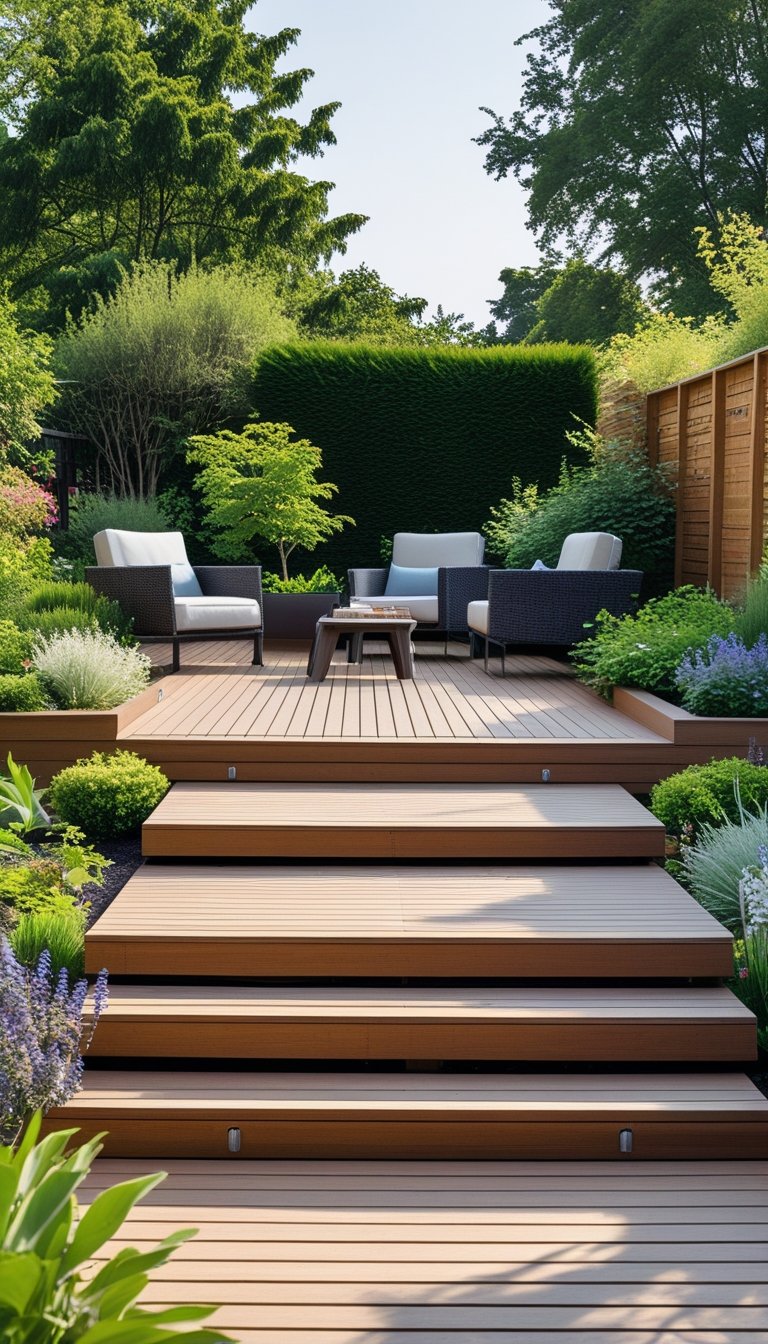
You can build a multi-tiered ground-level deck to create clear zones for dining, lounging, or grilling. Each platform sits at a slightly different height and connects with short steps.
This layout works well in sloped yards, as shown in these multi-level deck ideas. You also add depth and function without raising the deck far off the ground.
6) Deck with gravel edges for natural drainage
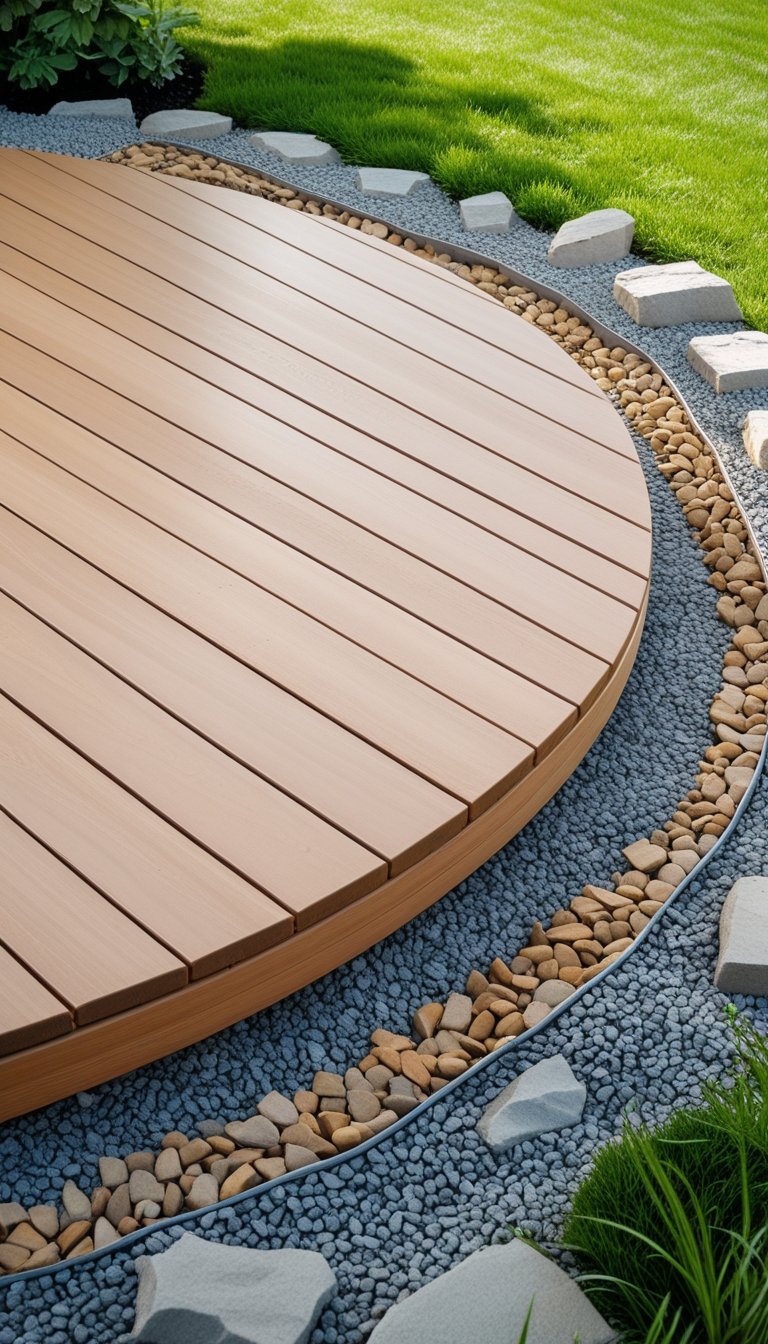
Add a gravel border around your low deck to control water and reduce mud. Gravel helps water drain away from the wood after rain.
A deck with gravel border creates a clear edge and adds contrast. You also limit weeds and erosion under and around the deck.
7) Square intimate deck resembling a wooden rug
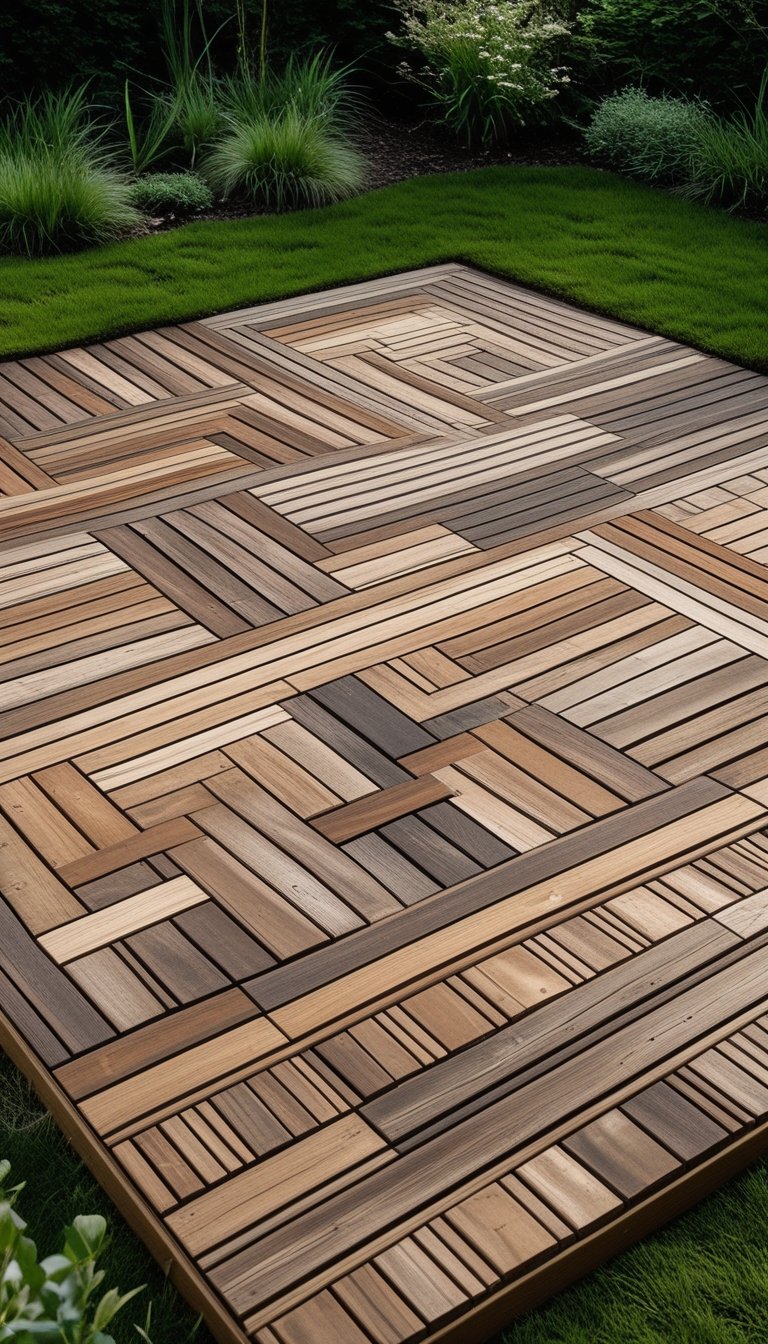
Build a small square deck that feels like a large wooden rug set on your yard. Keep it low and close to the ground for easy access.
This layout works well in tight spaces. Many low deck ideas ground level show how a simple square shape creates a cozy, defined seating area without taking over your yard.
8) Courtyard deck with brick accents
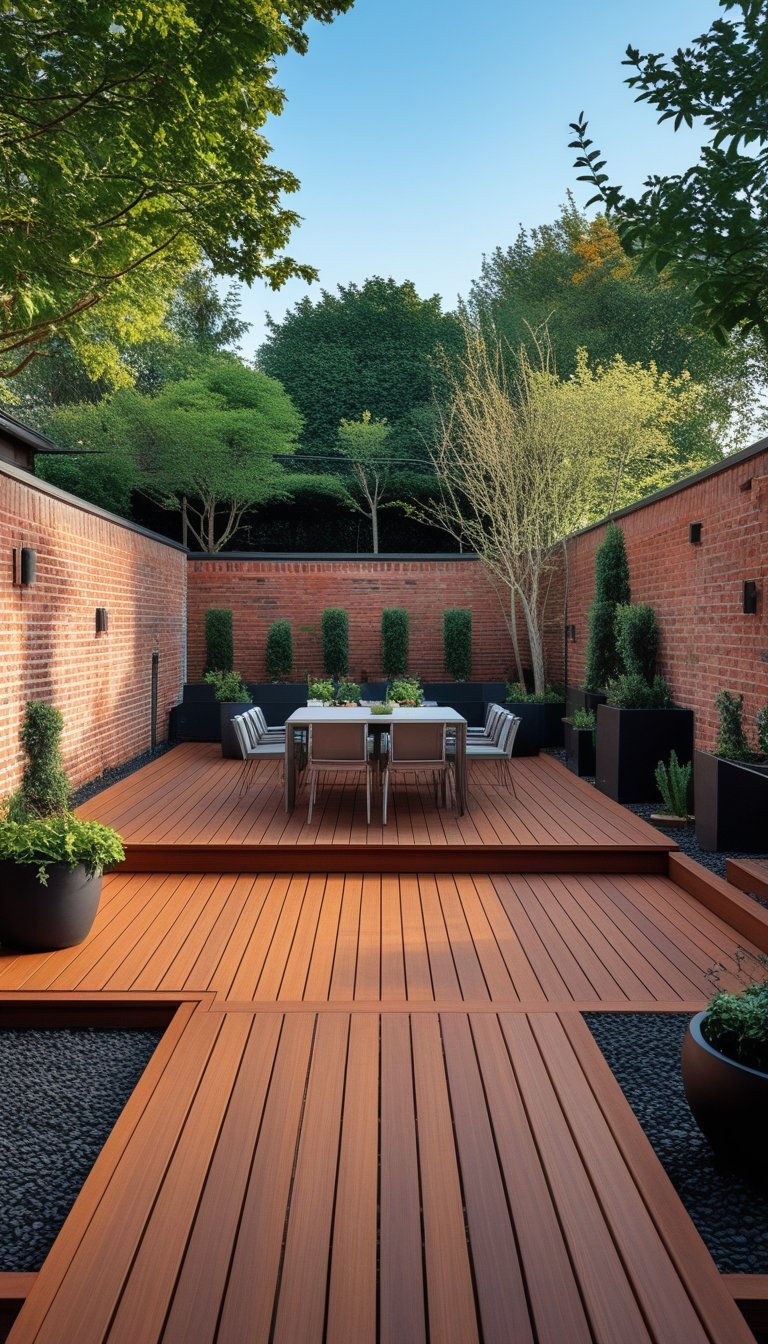
Build a low deck that fits tight spaces. Frame it with brick borders to match nearby walls or patios.
Use ideas from these ground level low decks to shape a simple layout. Add brick pavers between boards or along the edge for contrast and durability.
9) Deck featuring easy step-in garden access
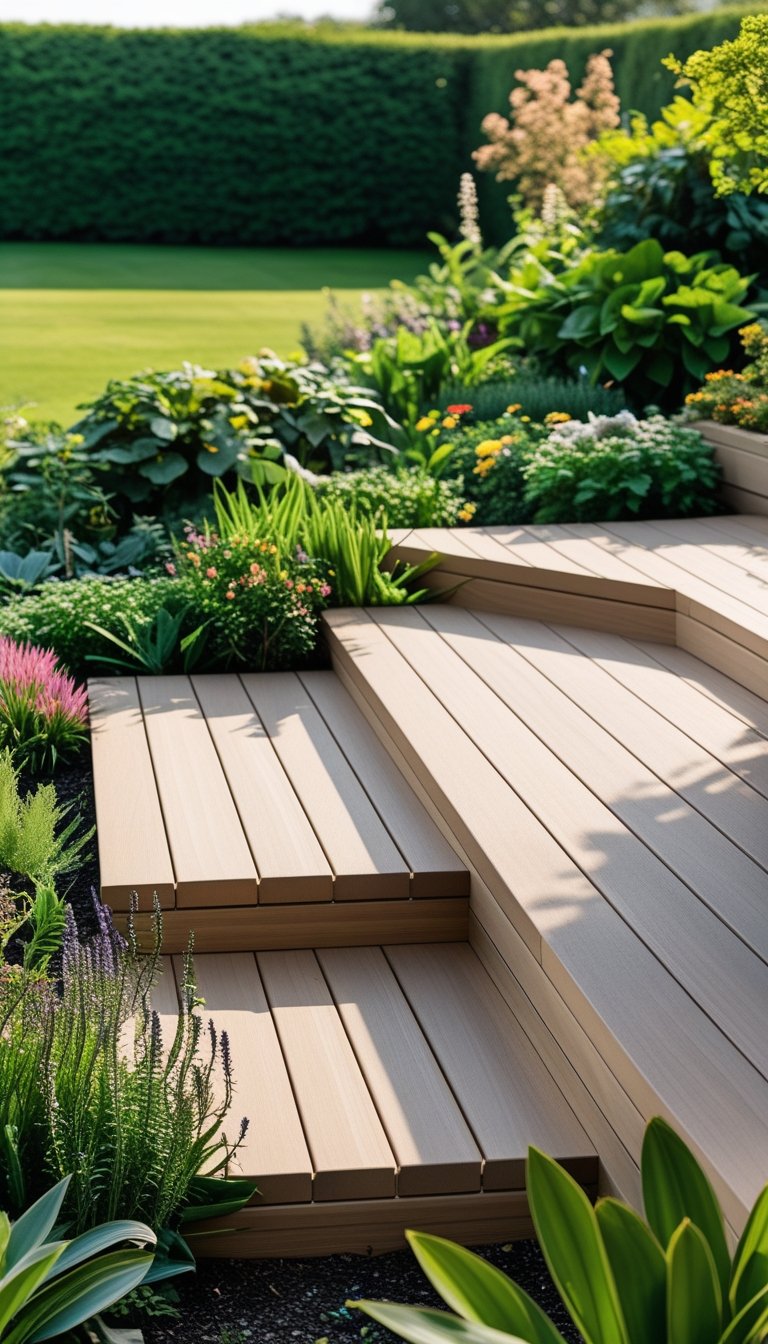
Design your low deck so you can step straight into your garden. Keep the deck close to ground level and align it with planting beds.
Use wide steps or no steps at all. Many ground-level deck ideas show how this layout creates smooth movement between deck and yard.
10) Budget-friendly simple ground-level deck
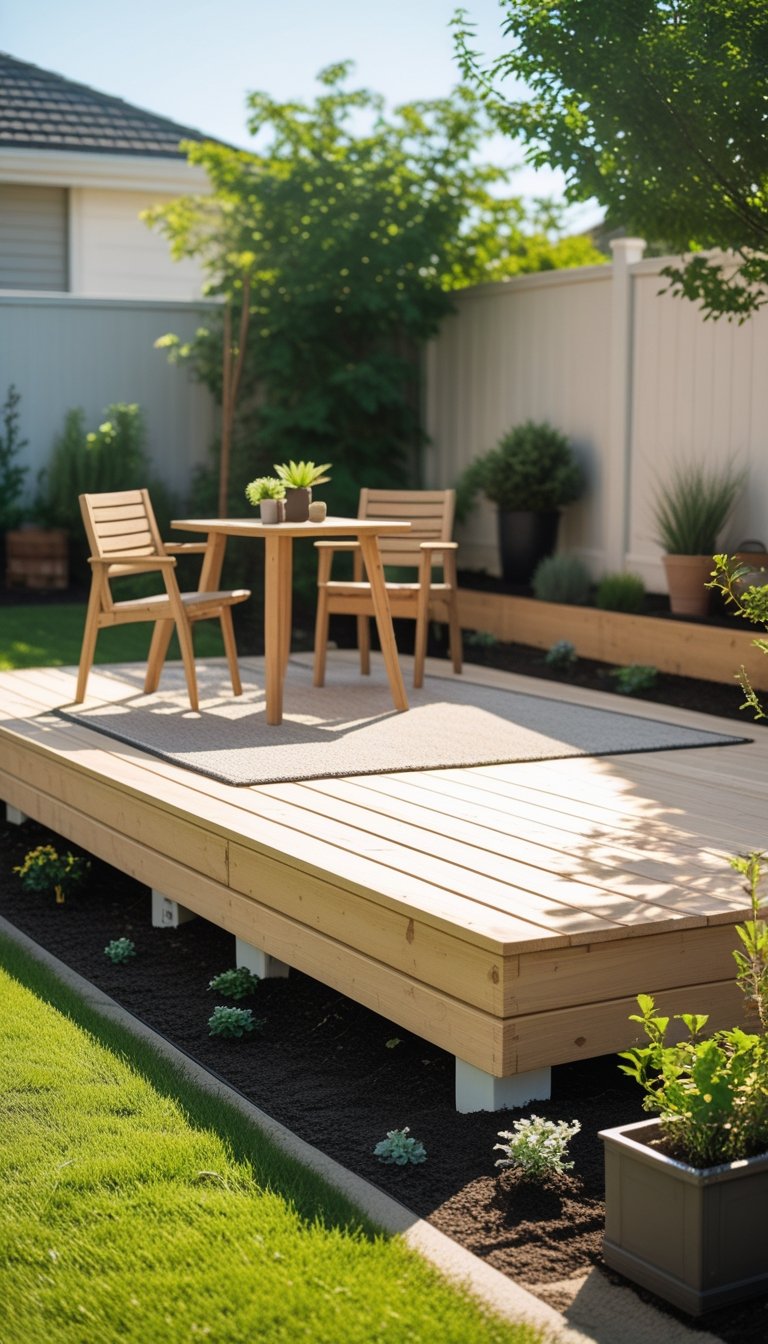
You can build a simple ground-level deck without high costs. Keep the design square or rectangular to reduce cuts and waste.
Many homeowners choose basic framing and minimal features to save money, as shown in these ground-level deck ideas on a budget.
National averages place ground-level decks around $10–$20 per square foot, depending on materials and size.
11) Low deck with planter boxes for greenery
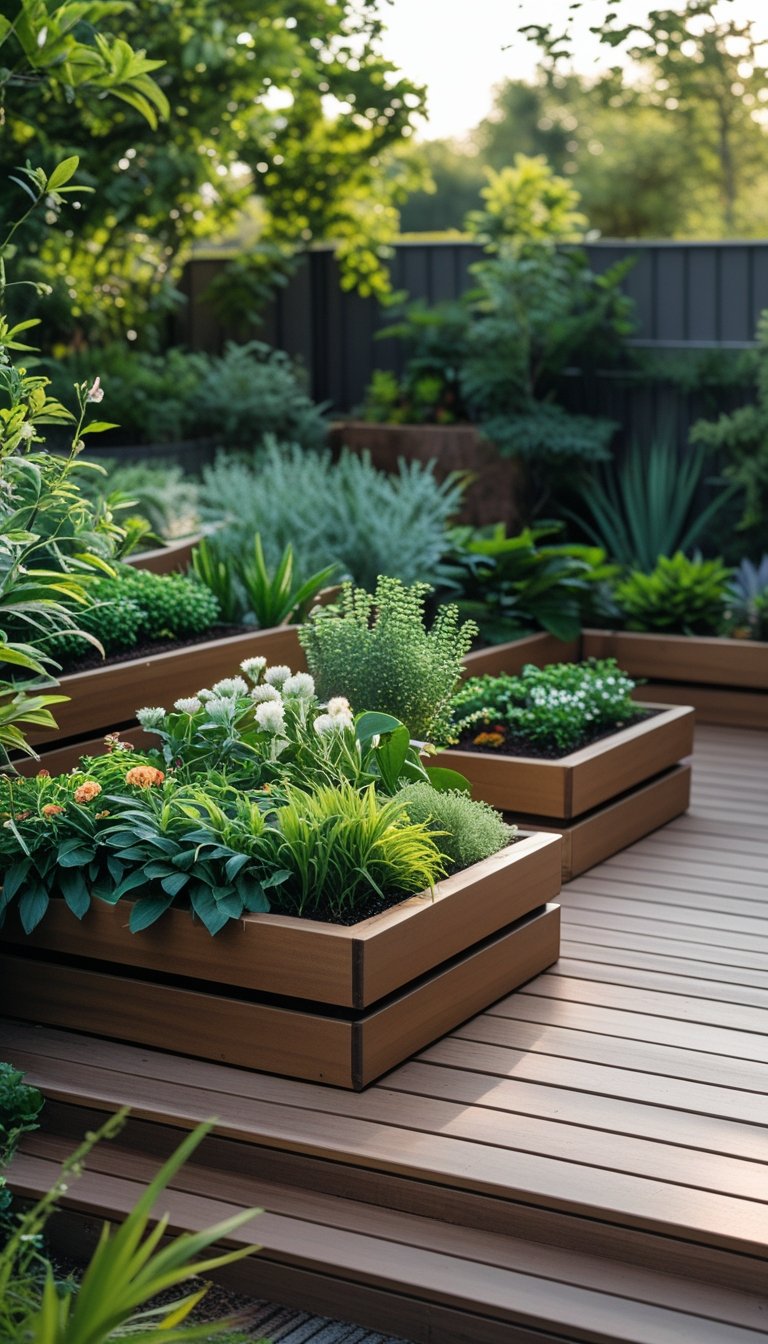
Add planter boxes along the edge of your low deck to frame the space. You define the layout while keeping the floor open.
Built-in boxes pair well with seating, as shown in these deck ideas with planter boxes and benches. Choose simple plants like boxwood or bamboo for clean lines and low upkeep.
12) Deck with outdoor lighting for evening use
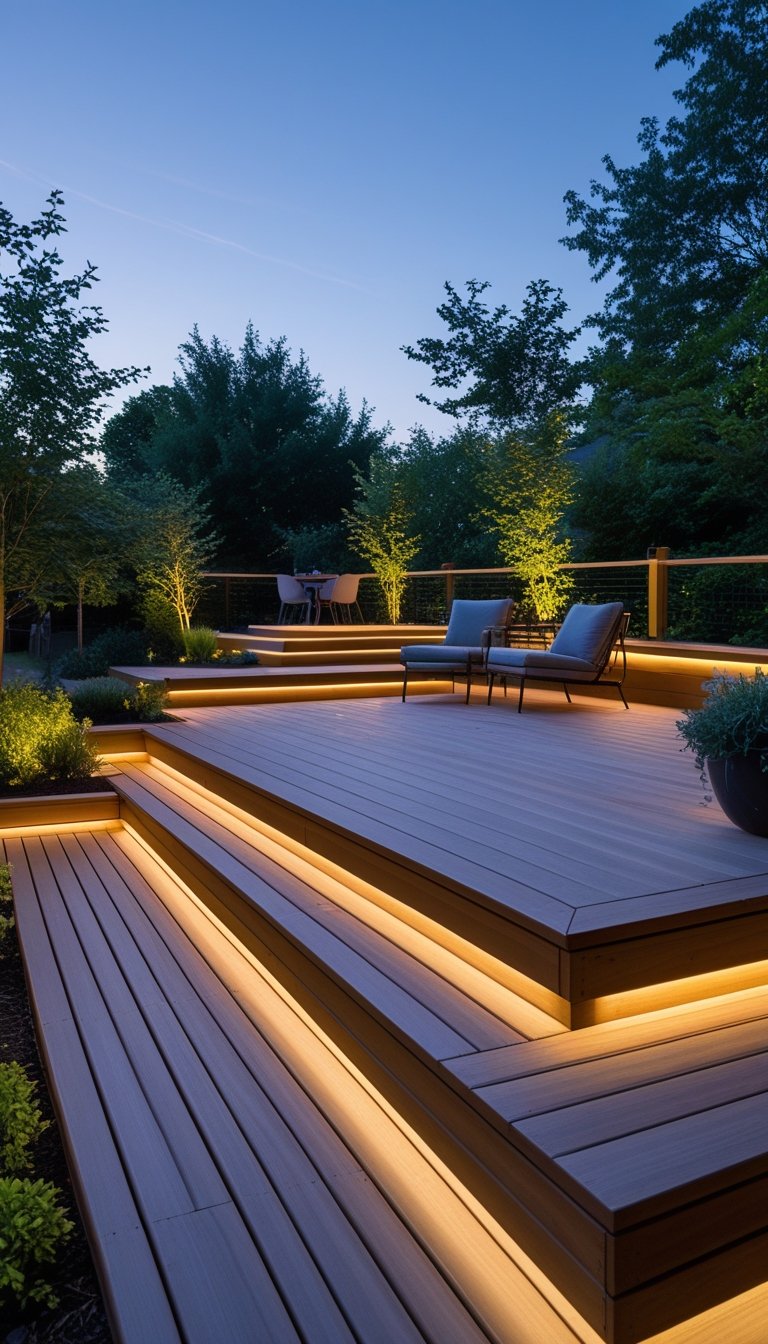
Add outdoor lighting so you can use your low deck after sunset. Install recessed step lights or post cap lights for clear paths and safer footing.
You can explore practical outdoor deck lighting ideas to plan fixture placement. Choose warm LED lights to create a calm, usable space without harsh glare.
13) Cabin entry deck for cleaning damp boots
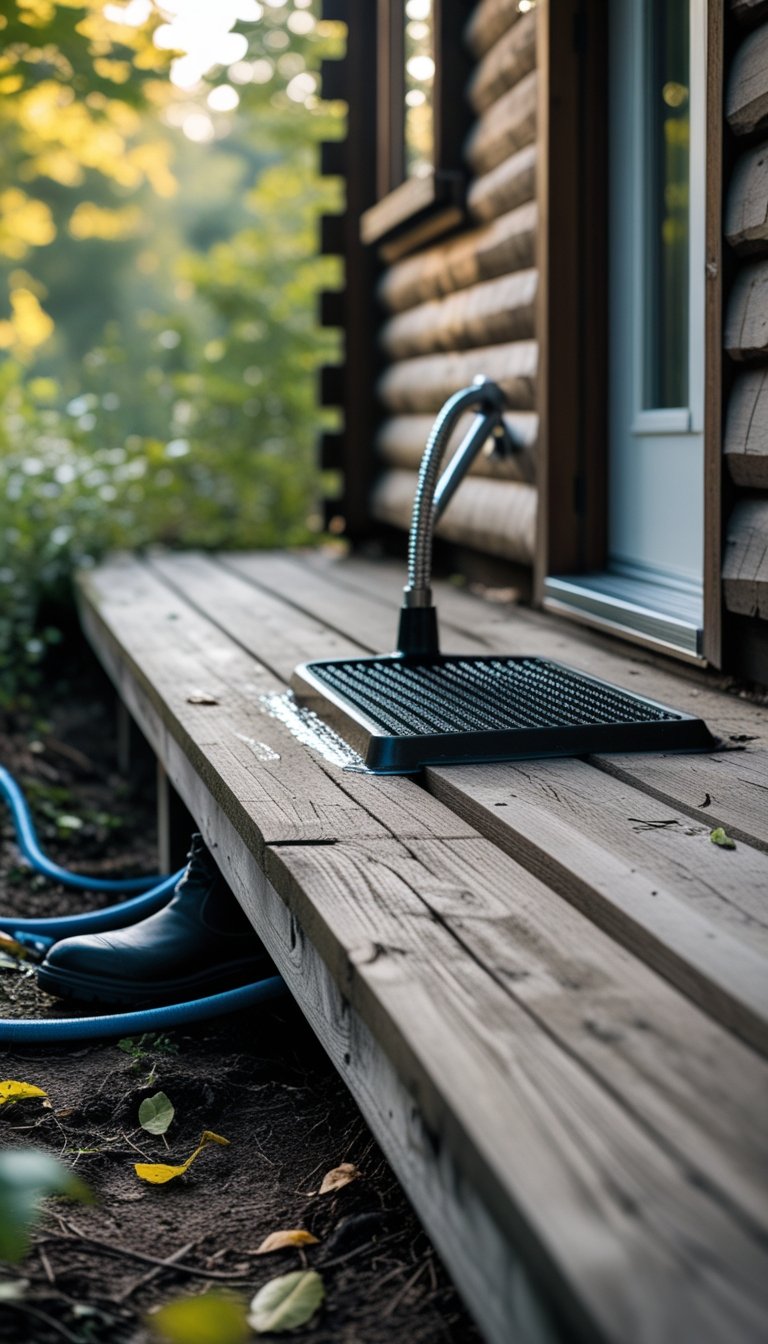
Build a small ground-level deck at your cabin entry to catch mud and water before it reaches your floor. Keep it low and stable.
Add a bench and boot tray. Use gravel borders for drainage, as seen in these ground-level low deck ideas.
14) Ground-level deck with storage compartments
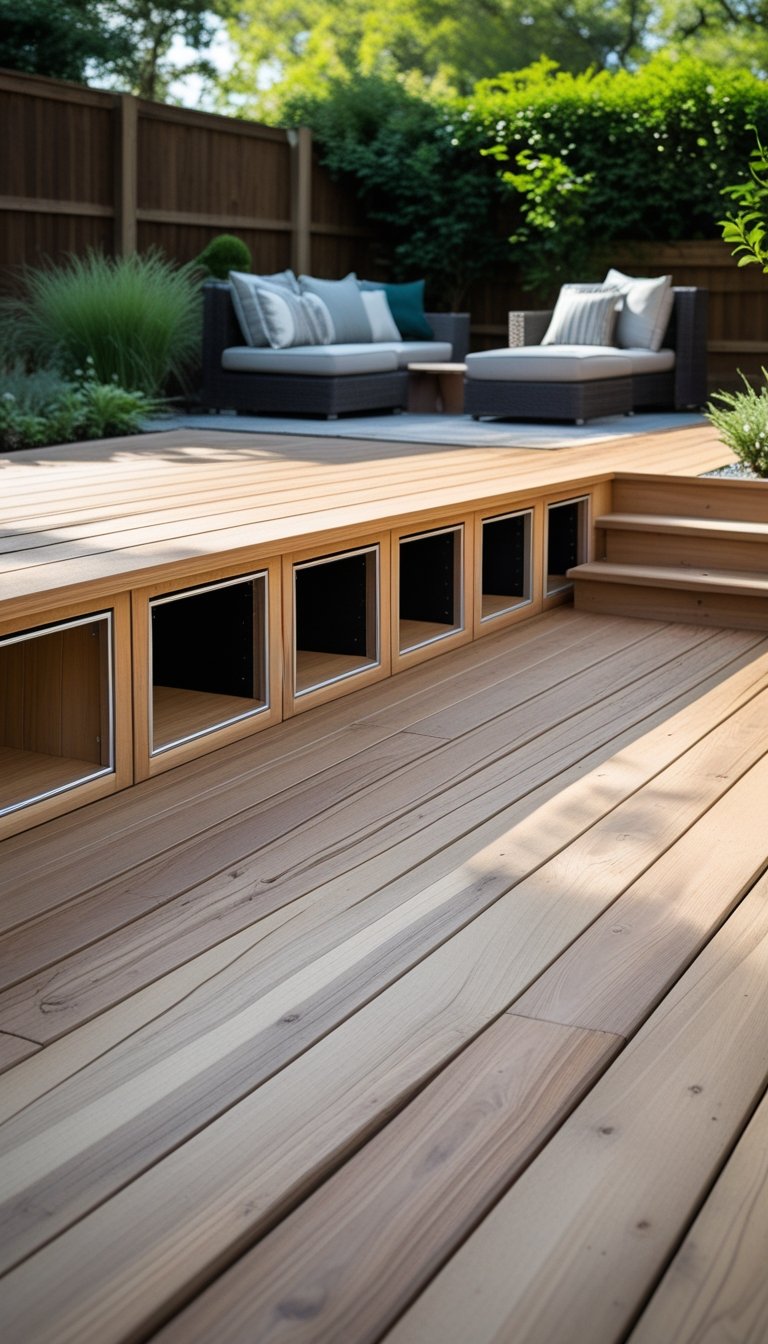
Add built-in storage to keep your deck clean and useful. Install benches with hinged lids or hidden compartments to store cushions, tools, or toys.
You can also add low cabinets along the edge. Many ground level deck ideas with built-in storage show simple ways to blend storage into the frame.
15) Deck designed for uneven terrain adaptation
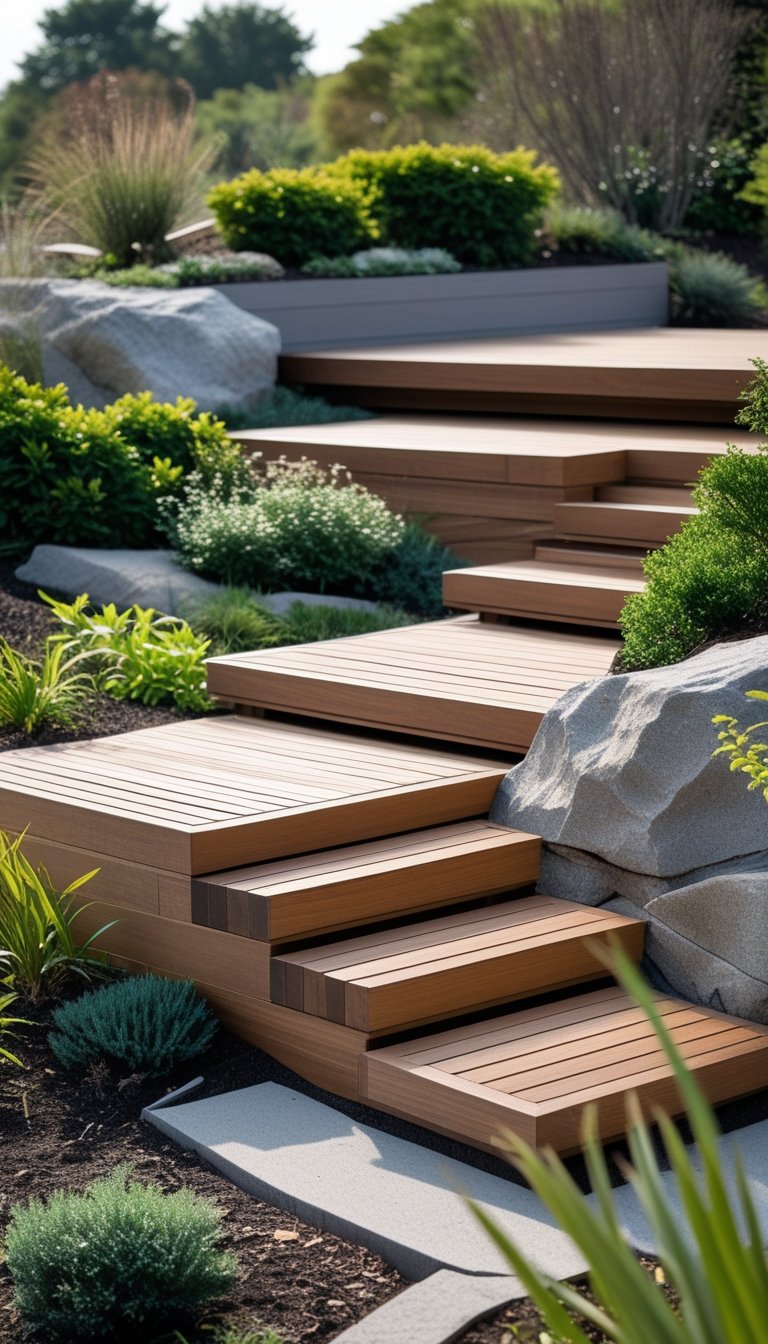
You can build a low deck that fits uneven ground without major excavation. Use adjustable pedestals or concrete deck blocks to create a stable, level base.
Learn practical methods for building a deck on uneven ground. Plan for drainage and airflow to reduce moisture issues.
Frequently Asked Questions
Low decks need careful planning to prevent moisture damage, improve drainage, and meet local building rules. You also need the right materials and simple design features to add comfort, privacy, and light without tall railings.
How low can a deck be built above the ground without causing moisture problems?
You can build a deck as low as 6 to 12 inches above the soil, but you must allow airflow under the frame. Wood framing that sits too close to the ground can trap moisture and rot faster.
If you build lower than 12 inches, use pressure-treated lumber rated for ground contact. Leave gaps between deck boards and avoid sealing off the sides so air can move freely.
How do you prepare the ground and ensure proper drainage before building a low deck?
Start by removing grass, roots, and topsoil. Level the area and create a slight slope away from your home so water drains properly.
Add landscape fabric to block weeds. Then spread 3 to 4 inches of compacted gravel to improve drainage and reduce standing water under the deck.
What type of foundation works best for a ground-level deck on soil?
Concrete deck blocks work well for simple floating platform decks. They sit on compacted gravel and support beams without deep footings.
For heavier builds like a multi-tiered ground-level deck design, concrete piers set below the frost line offer more stability. In some areas, ground screws or helical piles also work well for firm soil.
What are the best materials for a durable low deck in wet or humid climates?
Pressure-treated lumber rated for ground contact handles moisture better than standard wood. Composite decking also resists rot and does not absorb water like natural wood.
Many homeowners choose composite for its low upkeep and long life, as shown in these ground level deck ideas for small yards. Cedar and redwood resist insects, but they still need regular sealing in humid areas.
Do ground-level decks typically require permits or inspections, and what code rules apply?
Some areas do not require permits for decks under a certain height, often 30 inches. However, local rules vary, so you must check with your city or county building office.
Even if no permit is required, you still need to follow code for footings, ledger attachment, and structural support. If you attach the deck to your home, inspections are more likely required.
How can you add privacy, lighting, and seating to a low deck without building railings?
You can add built-in benches along the edges to define the space without tall barriers. A low deck with built-in benches also adds seating without extra furniture.
For shade and privacy, install a pergola or lattice screen. Many homeowners use pergolas for comfort and style, as seen in these ground level deck ideas with pergolas and benches.
Use low-voltage LED lights under benches or along deck edges. Solar post caps, recessed step lights, and string lights improve safety without changing the deck height.