
12 Deck Skirting Ideas for Dogs: Practical, Durable Options to Keep Pets Safe and Comfortable
You want a deck skirting solution that keeps your dog safe, blocks digging, and still looks good with your home. This article shows practical, dog-friendly skirting ideas that balance protection, airflow, and easy access so you can pick the best option for your yard.
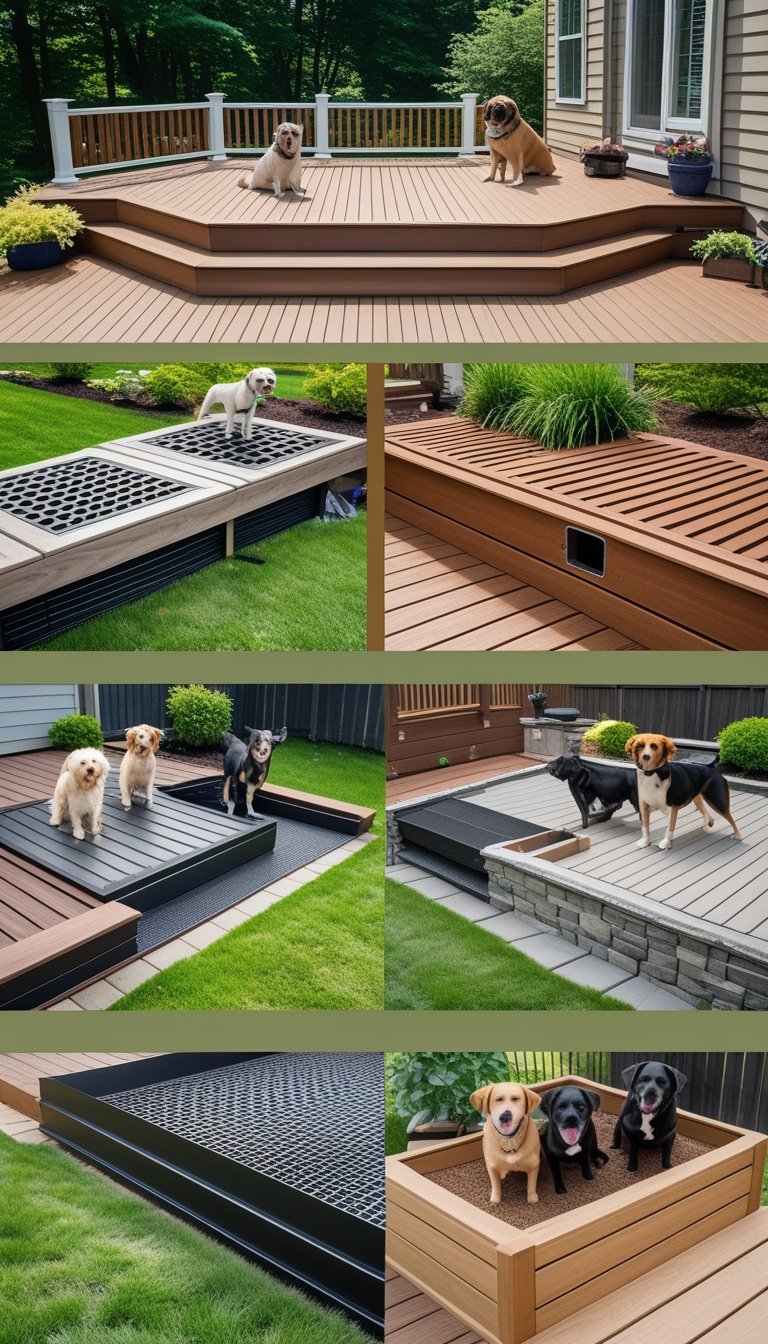
They will cover breathable lattices, solid wood with gaps, metal mesh, PVC, removable panels, built-in dog doors, and low-maintenance choices so you can match style and function to your dog’s habits and your climate.
1) Raised lattice panels for ventilation and protection
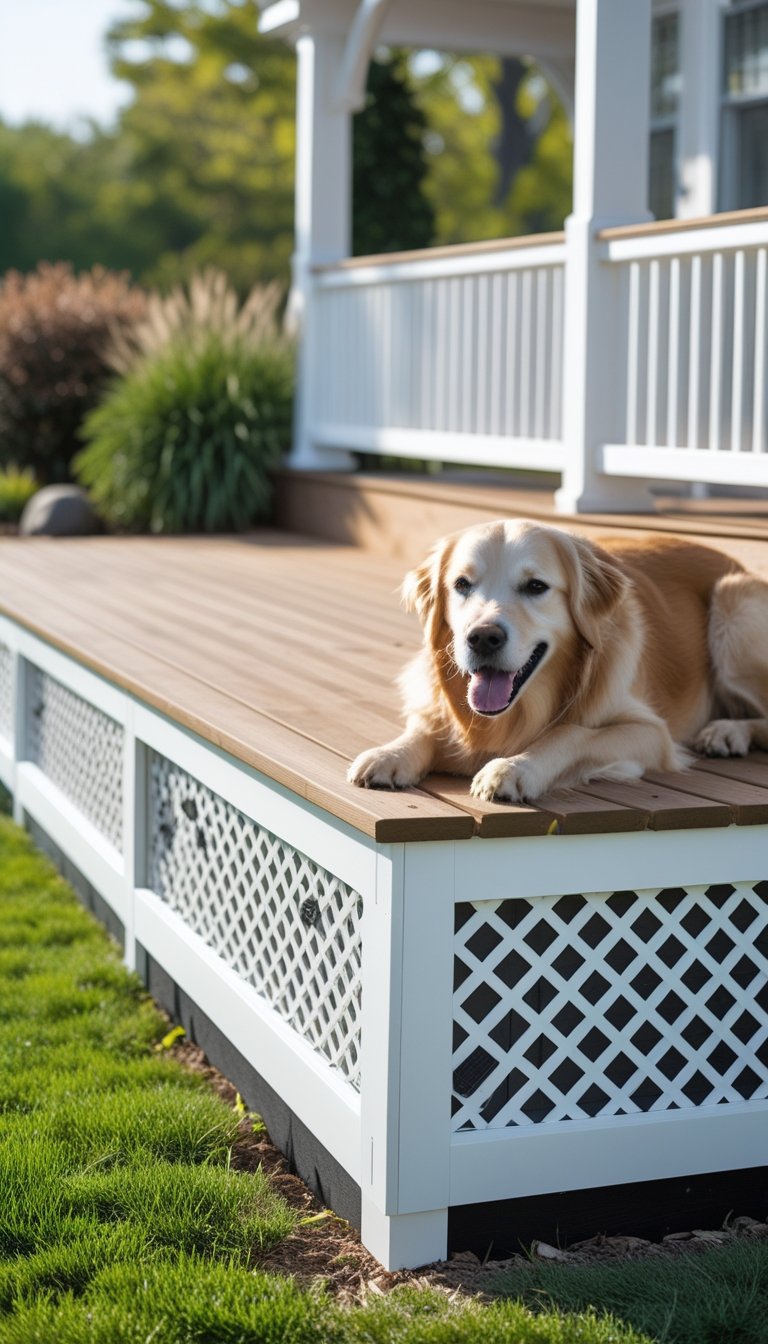
They install a raised lattice to keep air moving under the deck while blocking dog access.
The gap at the bottom lets small dogs see out and prevents trapping moisture.
Choose durable materials and secure panels with rust-proof screws for safety.
2) Solid wood skirting with small gaps for airflow
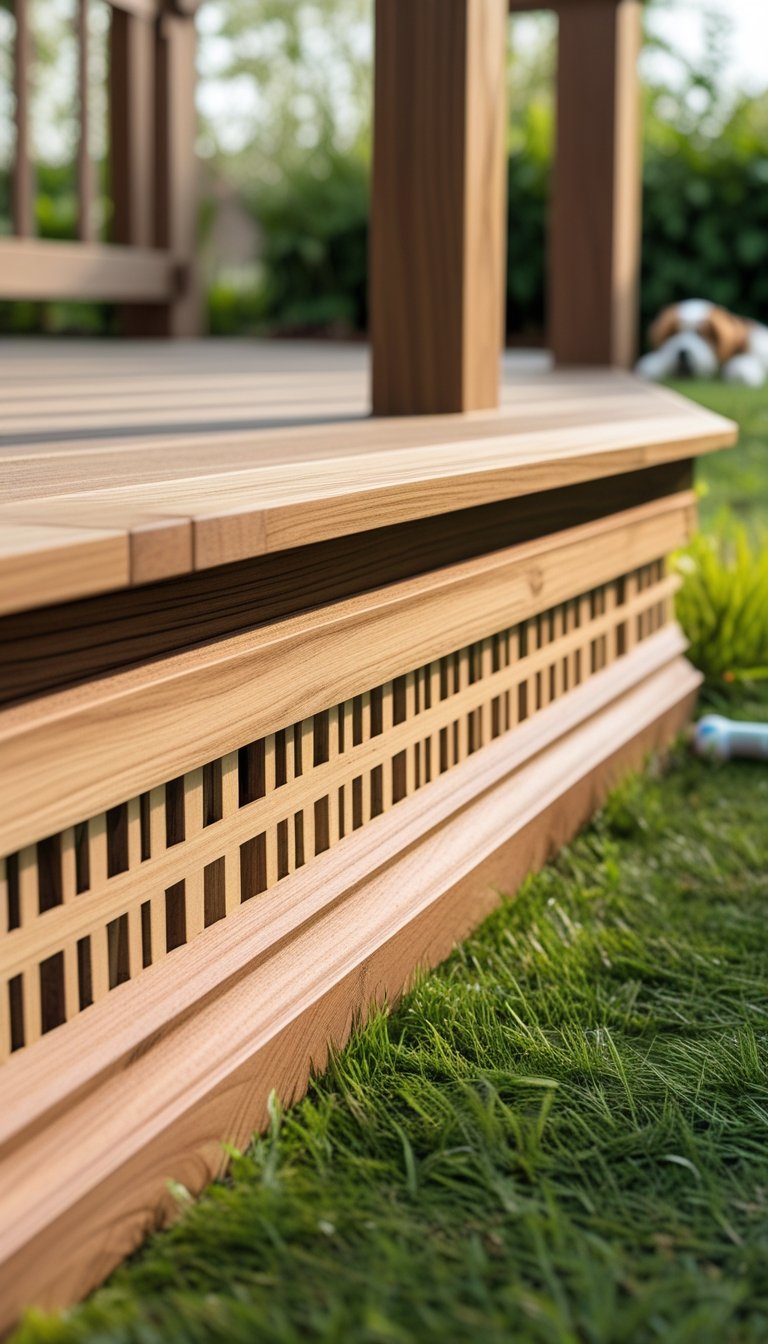
They build a sturdy wood skirt and leave narrow gaps for ventilation.
This keeps moisture down and blocks curious dogs from crawling under the deck.
3) Metal mesh skirting to prevent digging
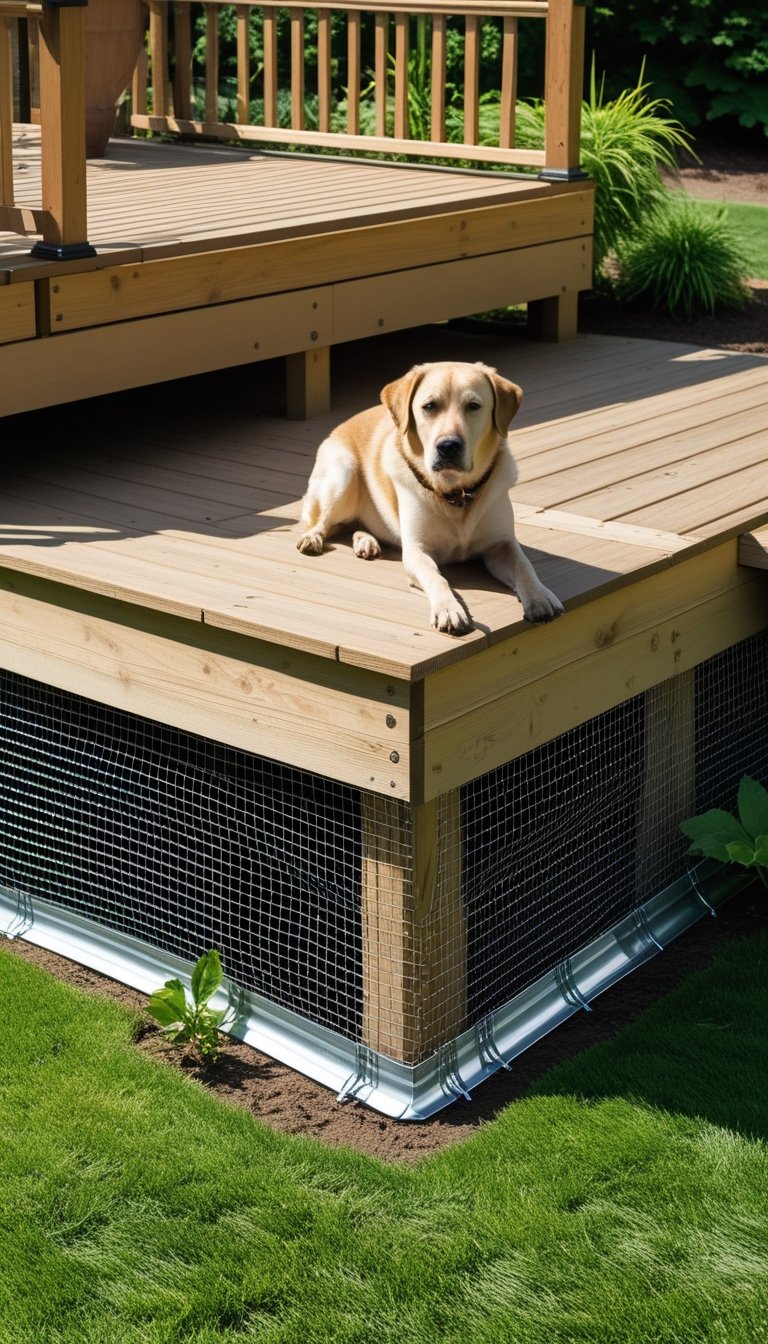
They attach galvanized or hardware cloth under the skirting to block digging.
Mesh bent outward in an “L” shape keeps animals from tunneling.
For details on installation and materials see deck skirting guides like this Deck Skirting Ideas | Decks & Docks.
4) PVC panels for easy cleaning and durability
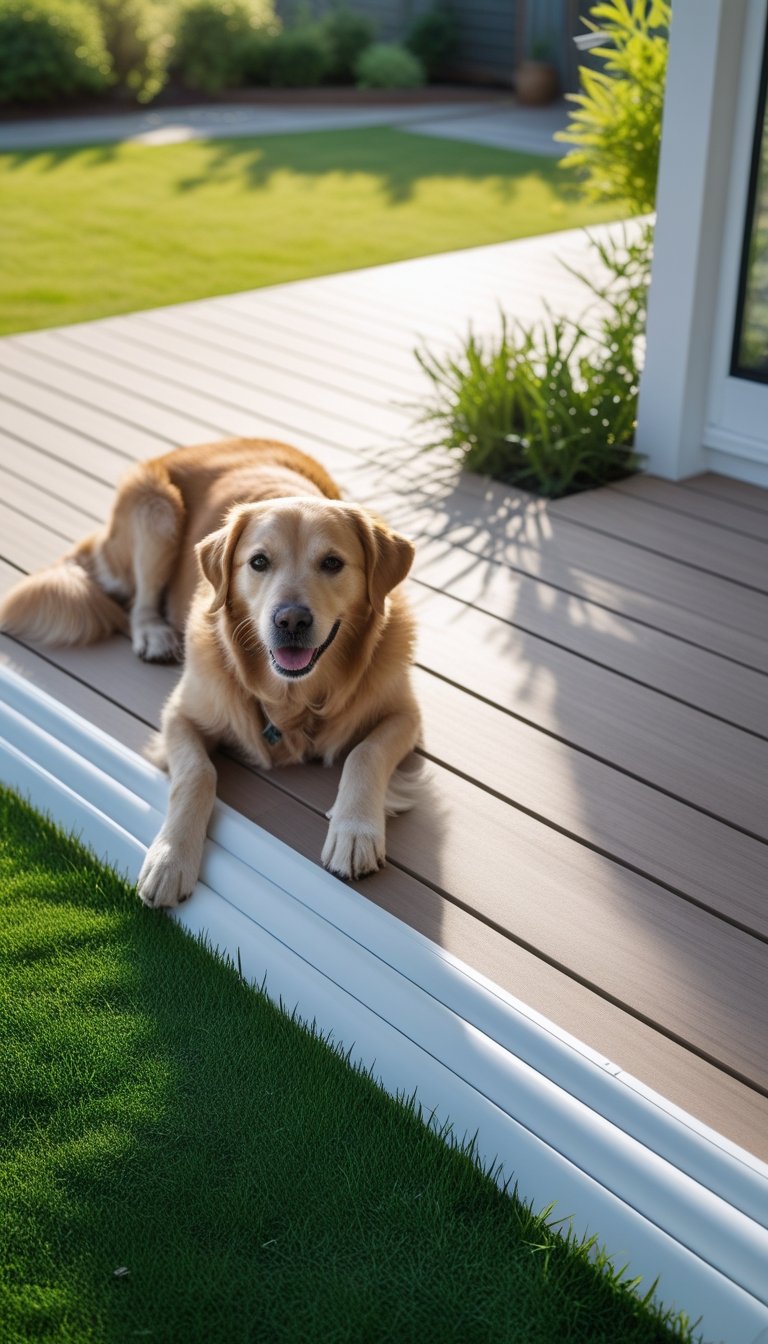
PVC panels resist moisture and chew damage, so they last longer under a deck.
They wipe clean quickly and do not need painting.
Choose ventilated panels to keep airflow and prevent mold.
5) Wire fencing with a decorative frame
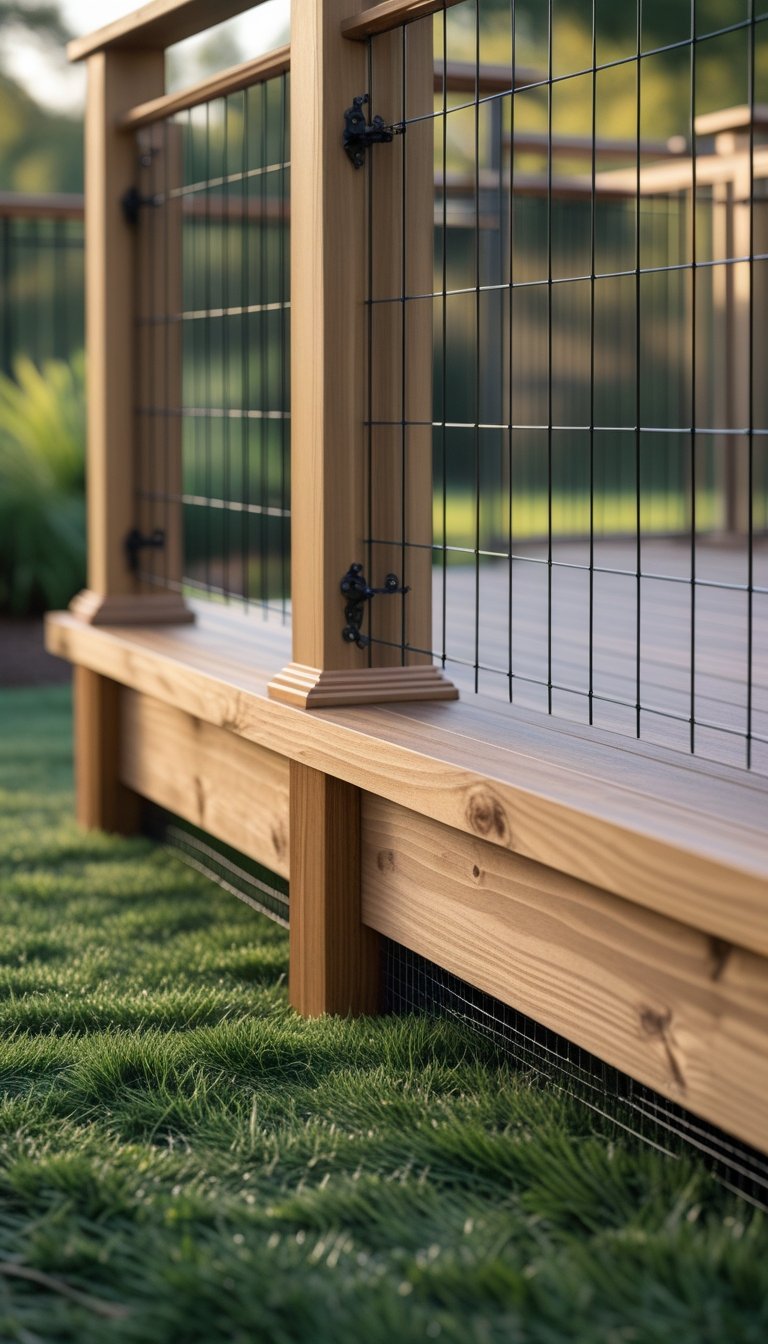
They install wire panels inside a wood or metal frame to keep dogs contained while allowing airflow and view.
The design pairs durable mesh with decorative trim for a neat look.
Homeowners can choose galvanized wire for rust resistance and easy cleaning.
6) Removable slatted wooden skirting for access
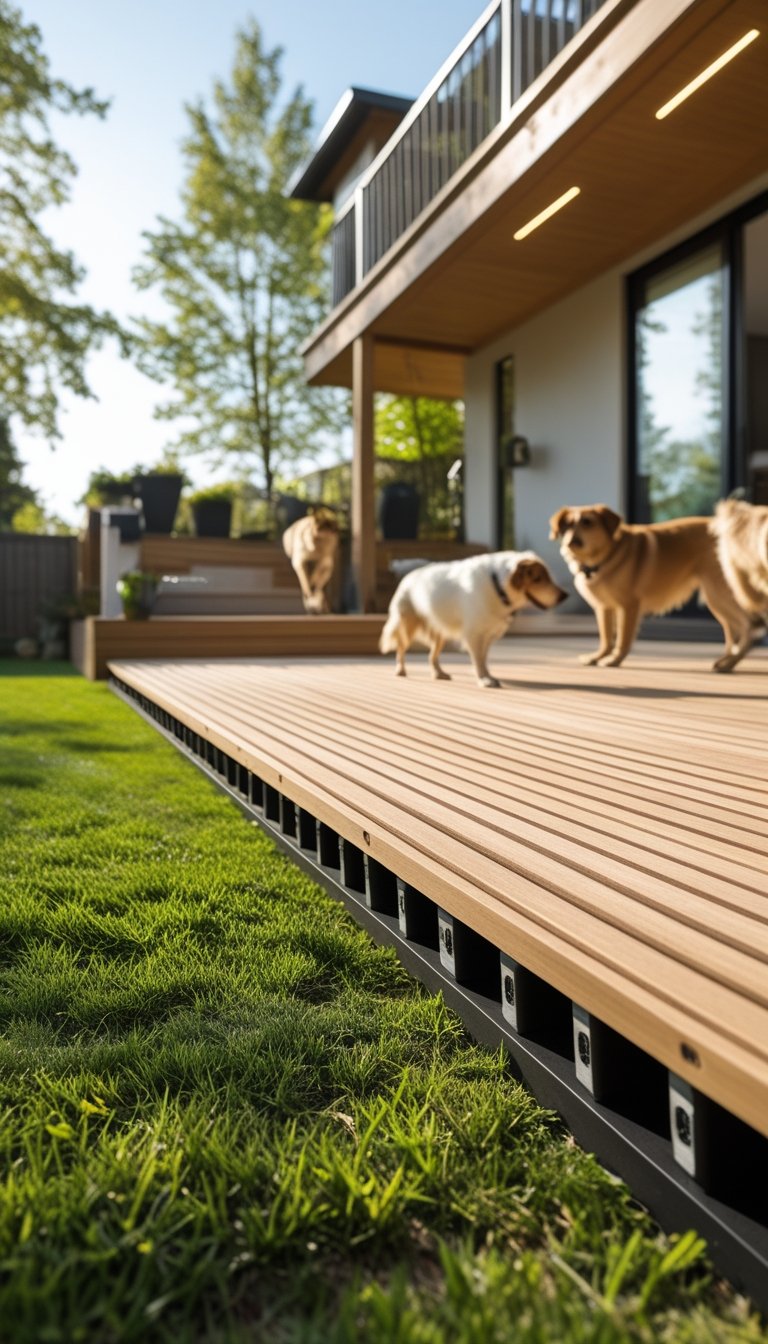
They install slatted panels that lift out for quick access to the space under the deck.
The slats allow airflow and let dogs see out while keeping them contained.
Panels can be secured with simple clips or hooks for safety.
7) Vertical board and batten design
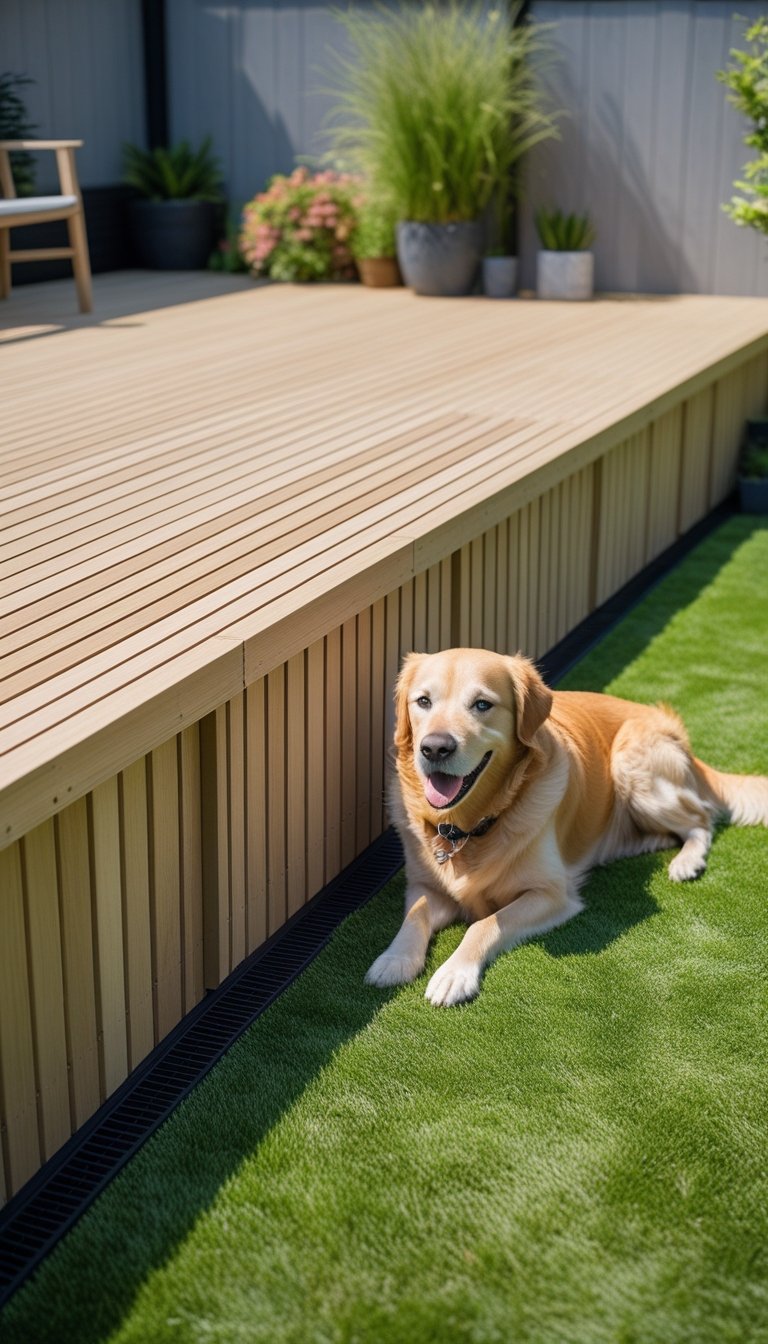
They use wide vertical boards with narrow battens covering seams to keep dogs from squeezing through.
This design looks neat and adds height to short decks.
See a clear example at Hard Decks: board and batten skirting.
8) Concrete block skirting for sturdiness
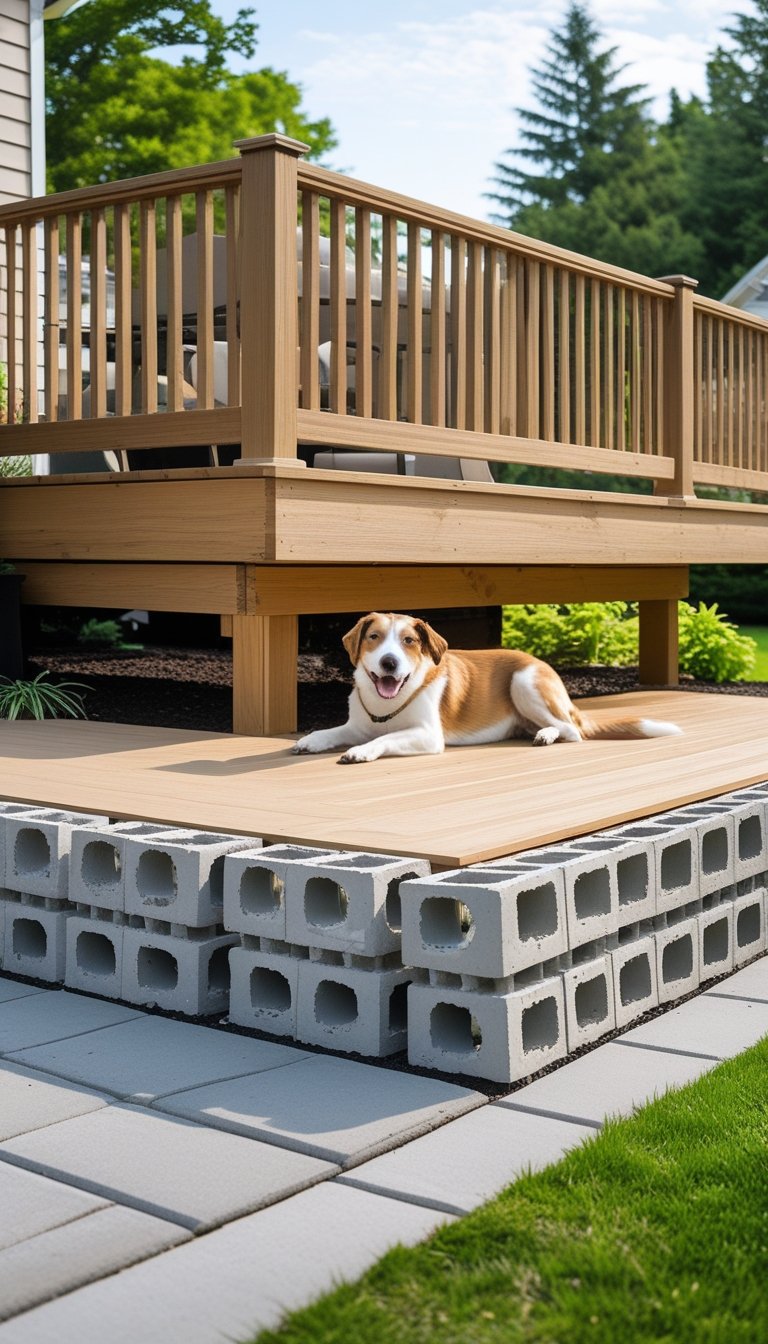
They place concrete blocks around the deck base to block animals and add strength.
Concrete resists chewing and holds up in wet climates.
They can be painted or faced with veneer for a neater look.
9) Stone veneer skirting for style and protection
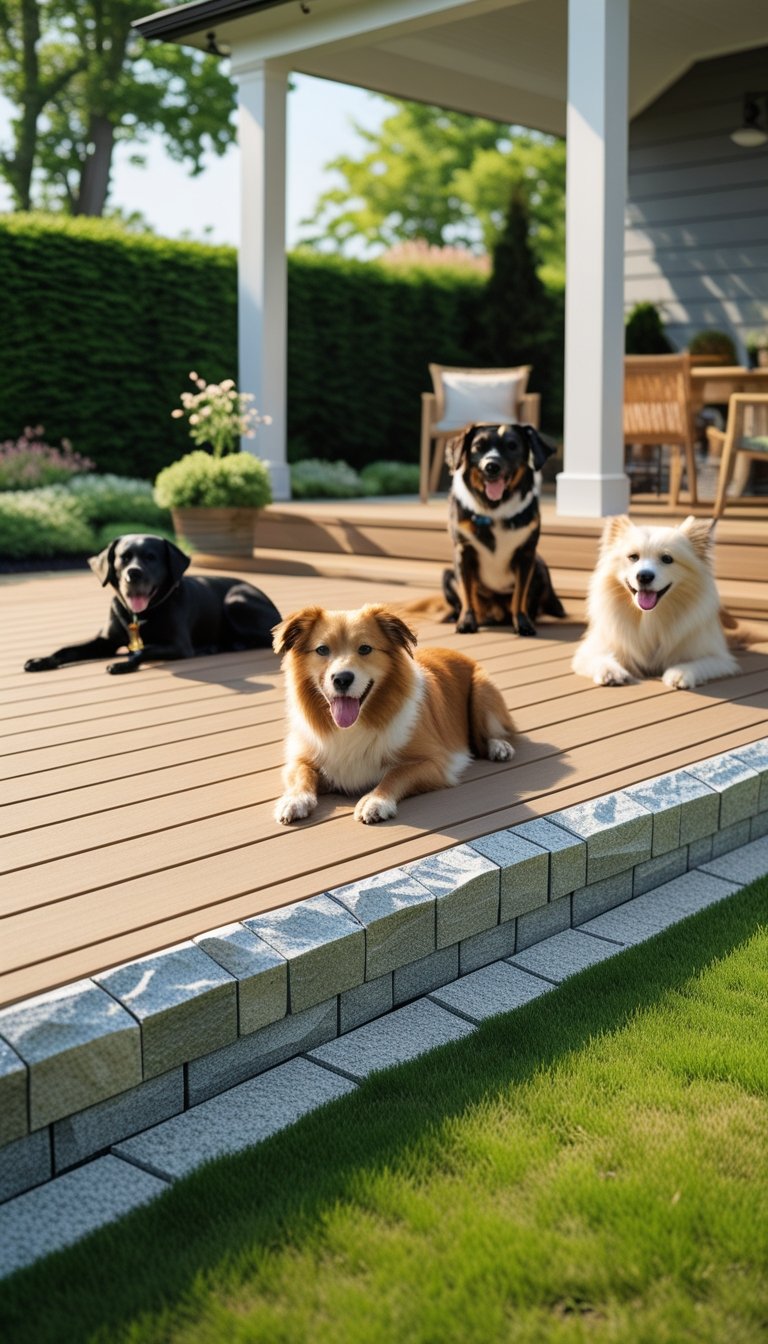
Stone veneer gives a clean, durable cover that resists chewing and weather.
It hides gaps and deters pests while matching home masonry or landscape.
Install panels on a framed base and seal edges to keep water out.
10) Skirting with built-in dog door access
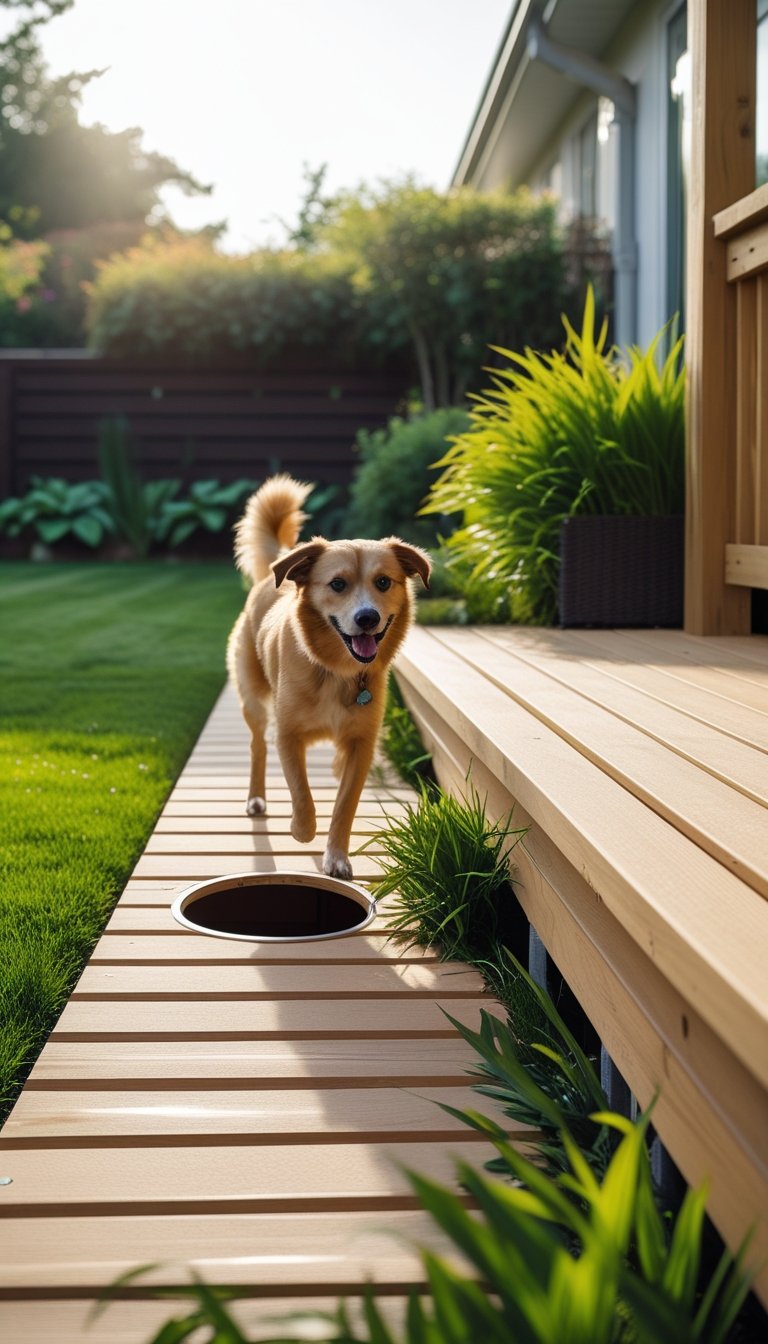
They install a dog door in the skirting so pets move freely between yard and deck.
The door fits into lattice, wood, or composite panels and keeps the underside tidy.
Owners should size the opening for their dog and weatherproof the frame.
Key Considerations for Dog-Friendly Deck Skirting
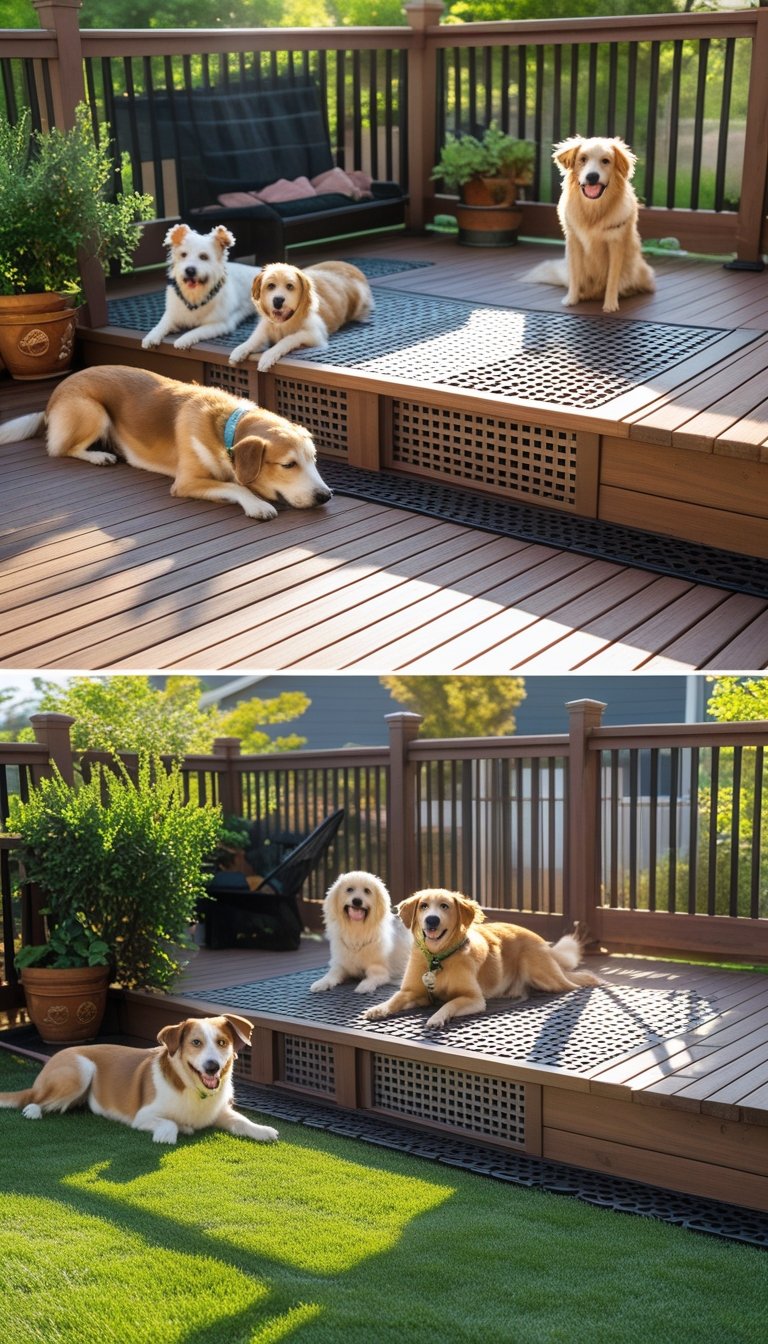
Choose skirting that keeps dogs safe, stops escapes, survives weather, and lets air move under the deck to prevent mold and pests. Focus on materials, fasteners, gap size, and access points that match the dog’s breed, local climate, and how the deck is used.
Safety and Security Features
Dogs need barriers that block holes, edges, and reach-under space. Use materials with small gaps—no larger than 1 inch for small dogs and 2 inches for medium and large breeds—to prevent paws or heads from getting stuck. Solid panels, tight lattice, or vertical slats work well.
Install a buried or anchored bottom rail to stop dogs from digging under the skirting. Fasten panels with tamper-resistant screws or carriage bolts so curious pets cannot loosen them. Hinged access doors with latch hardware give owners a way to reach under the deck while keeping dogs contained.
Avoid wide horizontal ledges that invite climbing. Round over or cap sharp edges and treat any exposed fasteners so they do not scratch or cut. Measure the dog’s height and behavior—jumpers may need taller skirting or additional top rails.
Weather Resistance and Durability
Pick materials that handle local weather and the dog’s activity level. Composite boards resist rot and chewing better than untreated wood and need less paint. Pressure-treated lumber is budget-friendly but requires sealing and periodic inspection for splinters. Metal panels, like perforated aluminum, resist moisture and last long in wet climates.
Use exterior-grade fasteners and hinges labeled for marine or exterior use to avoid rust. Leave a small gap (about 1/4 inch) at the bottom of panels if snow or leaves collect; this prevents trapped moisture while still blocking pets. For sunny, hot areas, choose light-colored or ventilated materials to reduce surface heat where dogs might lean or rest.
Plan for maintenance: schedule checks every 6–12 months for loose boards, chewed spots, or rust. Replace damaged sections quickly to maintain safety.
Ventilation and Pest Control
Proper airflow prevents mold, rot, and overheating under the deck while still keeping dogs out. Aim for 1–2 square feet of ventilation per 150 square feet of deck floor, using screened vents or slatted panels spaced to stop pet access but allow air to pass. Raised skirting with a 1–3 inch crawl gap helps airflow and makes drainage visible.
Keep pests away by sealing gaps larger than the chosen pet-safe spacing and installing fine-mesh screening where rodents or snakes are a concern. Use treated gravel or a concrete perimeter to block burrowing animals under the skirting. Check for standing water after storms and add drainage or ground slope corrections when needed.
Choose materials that do not hold moisture—composite, metal, or rot-resistant cedar—to reduce insect attraction. Routine inspection for nests, chew marks, and gaps helps catch pest problems early.
Maintenance Tips for Deck Skirting With Pets
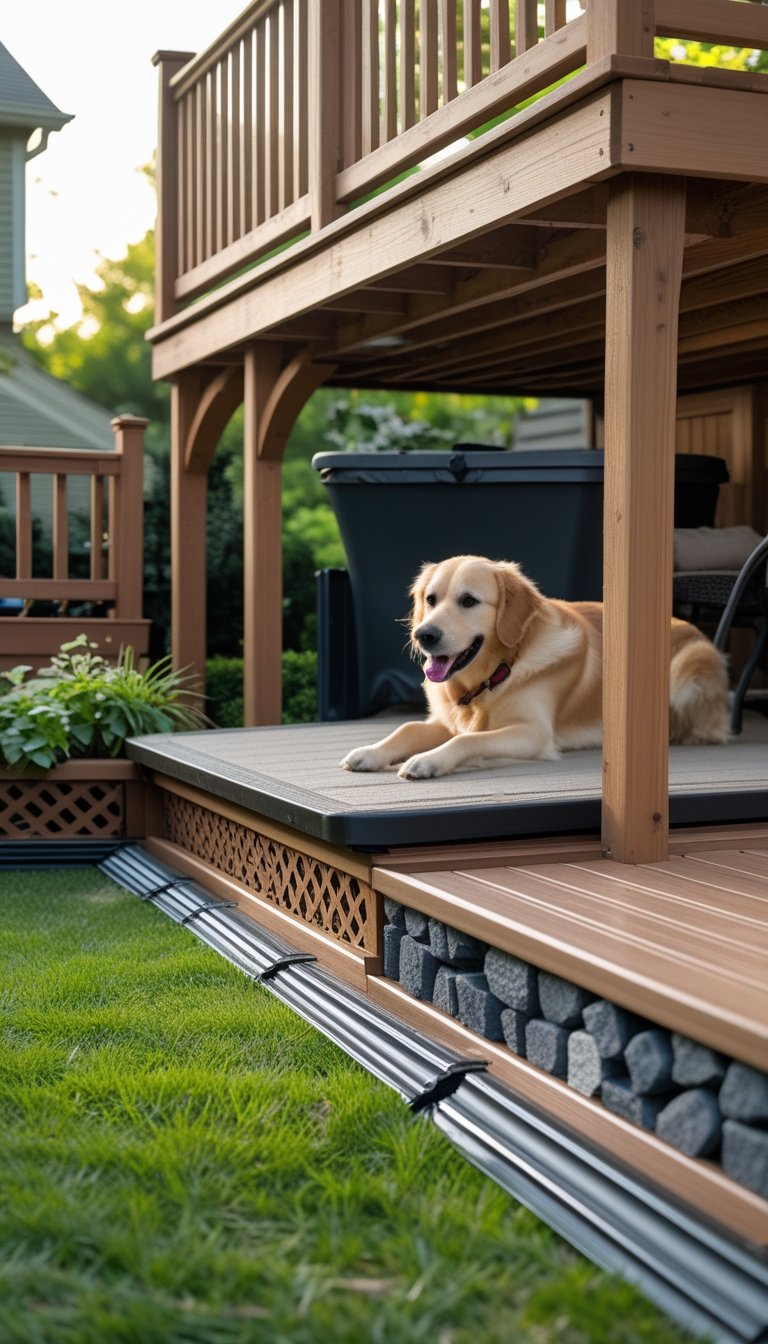
Keep skirting clean, check fasteners and gaps, and replace chewed or rotten pieces quickly. Use pet-safe cleaners, keep vents clear, and watch for burrows or chew marks that can let pets through.
Cleaning Techniques
They should remove loose debris weekly. Use a broom or leaf blower to clear dirt, hair, and leaves from the skirting perimeter and under the deck. This reduces pests and odors that attract dogs.
For stuck grime or pet urine, mix mild dish soap with warm water and scrub with a soft brush. Rinse thoroughly with a garden hose. Avoid bleach or strong solvents that can harm paws; choose pet-safe cleaners labeled non-toxic.
Pressure washers work on composite and PVC but keep the nozzle at least 2–3 feet away and use a low setting to avoid splitting wood or forcing water behind the skirting. Dry areas after cleaning to prevent mold. Spot-treat stains quickly to limit lingering smells.
Inspecting for Damage
They should inspect skirting monthly for loose boards, gaps, or chew marks. Small gaps invite curious dogs and pests; measure openings and make repairs if gaps exceed 2 inches or if fasteners have backed out.
Check for rot, splintering, or soft spots in wood skirting. Probe suspicious areas with a screwdriver; soft wood needs replacement. For lattice or wire panels, test tension and repair torn sections to prevent escapes.
Also inspect ground contact and drainage. Look for soil washout or burrow signs under the skirting and adjust grading or install gravel to discourage digging. Tighten or replace screws, hinges, and latches so panels stay secure against dog pressure.